Weekend
Barcelona
Barcelona
Info
How to get there
Main destination airport: Josep Tarradellas Barcelona-El Prat Airport (BCN) – the closest one to the city centre. Cheap, fast Aerobús coaches and R2 Nord trains run from here.
Alternative airports: Girona-Costa Brava Airport (GRO) – some 90 km from Barcelona, served mainly by Ryanair. A direct bus takes you to the centre of Barcelona (about 1 hour 15 minutes).
Barcelona — a city that smells of the sea and fried churros
Some cities you have to visit with a checklist in hand. And then there is Barcelona, where the best things happen the moment you turn down a random side street because music was drifting out of a window.
Two thousand years in a single walk
It started with the Romans, who founded a settlement called Barcino here in the 1st century BC. In the Gothic Quarter you can still touch fragments of the Roman walls — they sit there quietly between a café and a souvenir shop, as if nobody minded that they are two thousand years old.
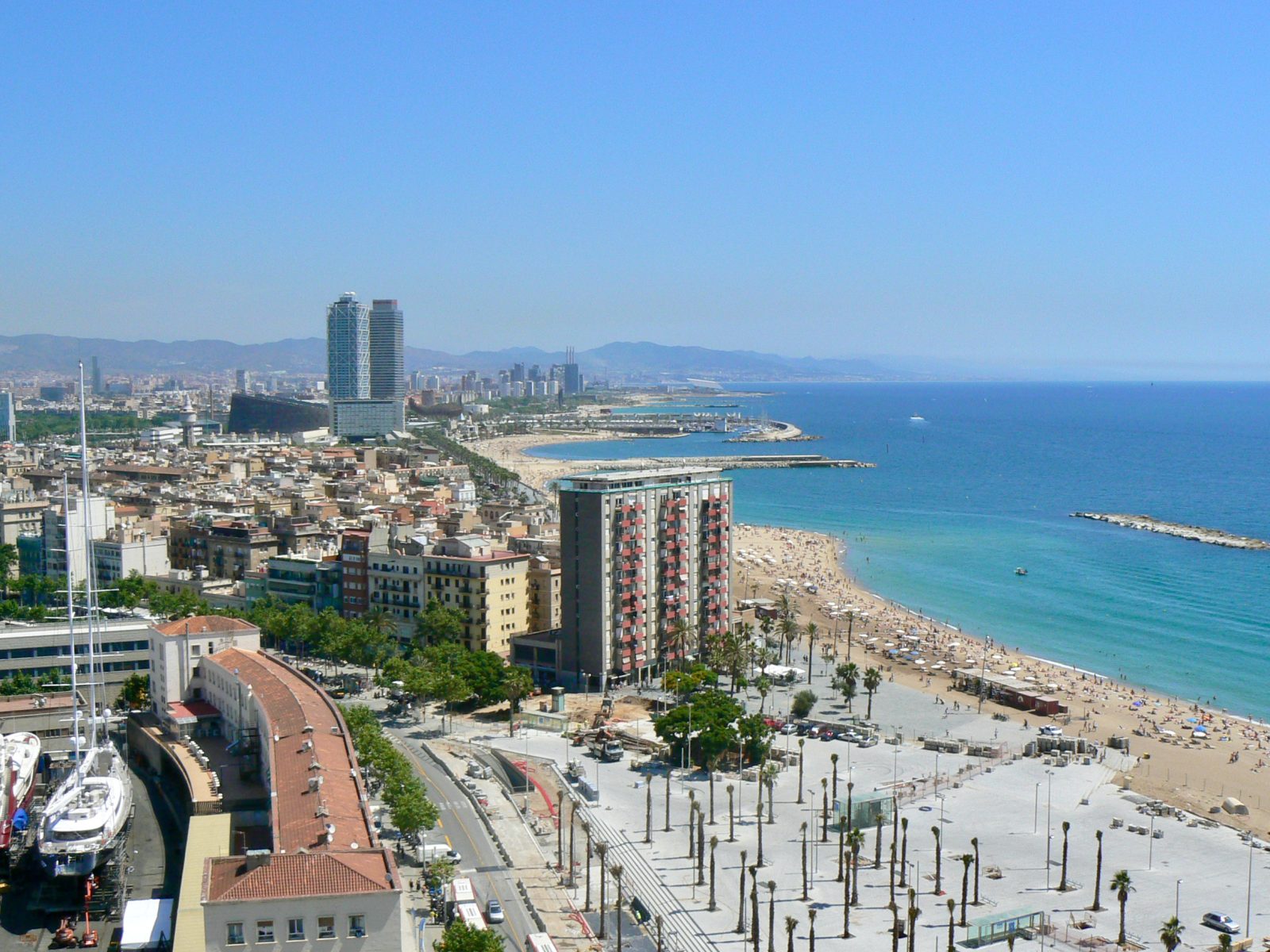
Then came centuries of glory as the capital of a Mediterranean empire, a long spell of being "Spain's other city", and finally 1992 — the Olympics that turned Barcelona around to face the sea. Before that, the waterfront was mostly warehouses and railway tracks. Today it is one of the best city beaches in Europe. Not bad for a single refurbishment.
The Columbus who points the wrong way
At the end of La Rambla, where the city meets the port, stands a sixty-metre column with Christopher Columbus on top, his arm stretched out towards the horizon. He was put up in 1888, for the World's Fair.
And here is my favourite detail: Columbus is not pointing at America. He is pointing roughly towards the Mediterranean and North Africa. Guides tell the story with such glee that I suspect it is the best-selling anecdote in town.
You can take a lift all the way to the top. Cramped, a queue, and a view worth every minute of the wait.
Sagrada Família, or a building site as a work of art
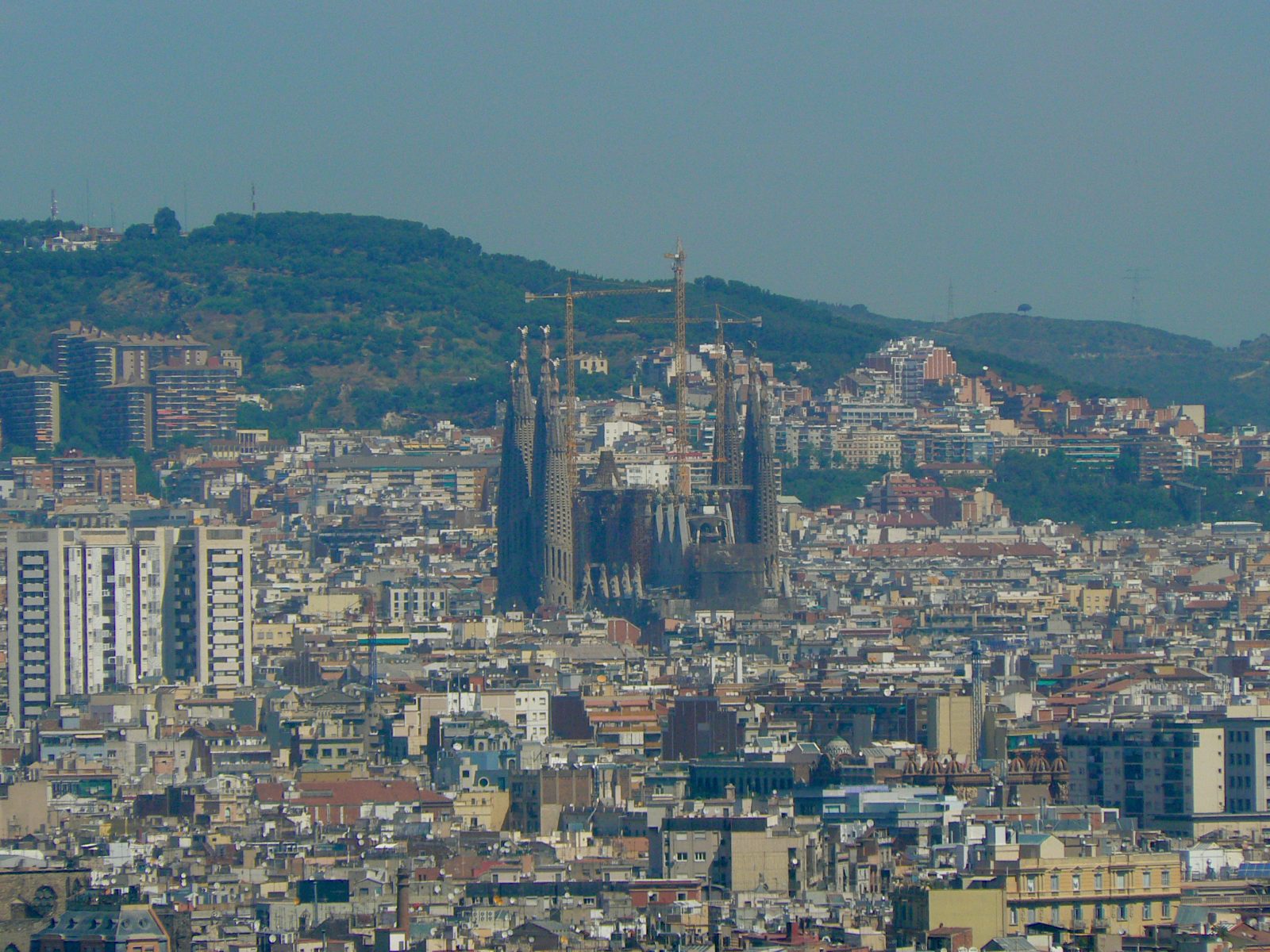
Gaudí started in 1882. They still have not finished.
It sounds like a joke, but the moment you step inside it stops being funny. Columns branch out overhead like the crowns of trees, and light pours in through the stained glass — cold, blue-green on the eastern side, warm, orange-red on the western one. At the right hour of the day the whole interior looks as though someone had spilled paint into the air.
Practical tip: buy tickets online several weeks in advance and pick a late-afternoon slot. That is when the western windows do their thing.
A beach fifteen minutes from the centre
Barceloneta is the closest, the most famous and the most crowded. If you want fewer people and more room for your towel, head further north — Bogatell and Nova Icària are calmer, cleaner and have better chiringuitos, the beach shacks serving food and cold beer.
The water is warm from June to October. Keep an eye on your things — Barcelona's beaches are beautiful, but pickpockets like holidays too.
Sharks beneath your feet
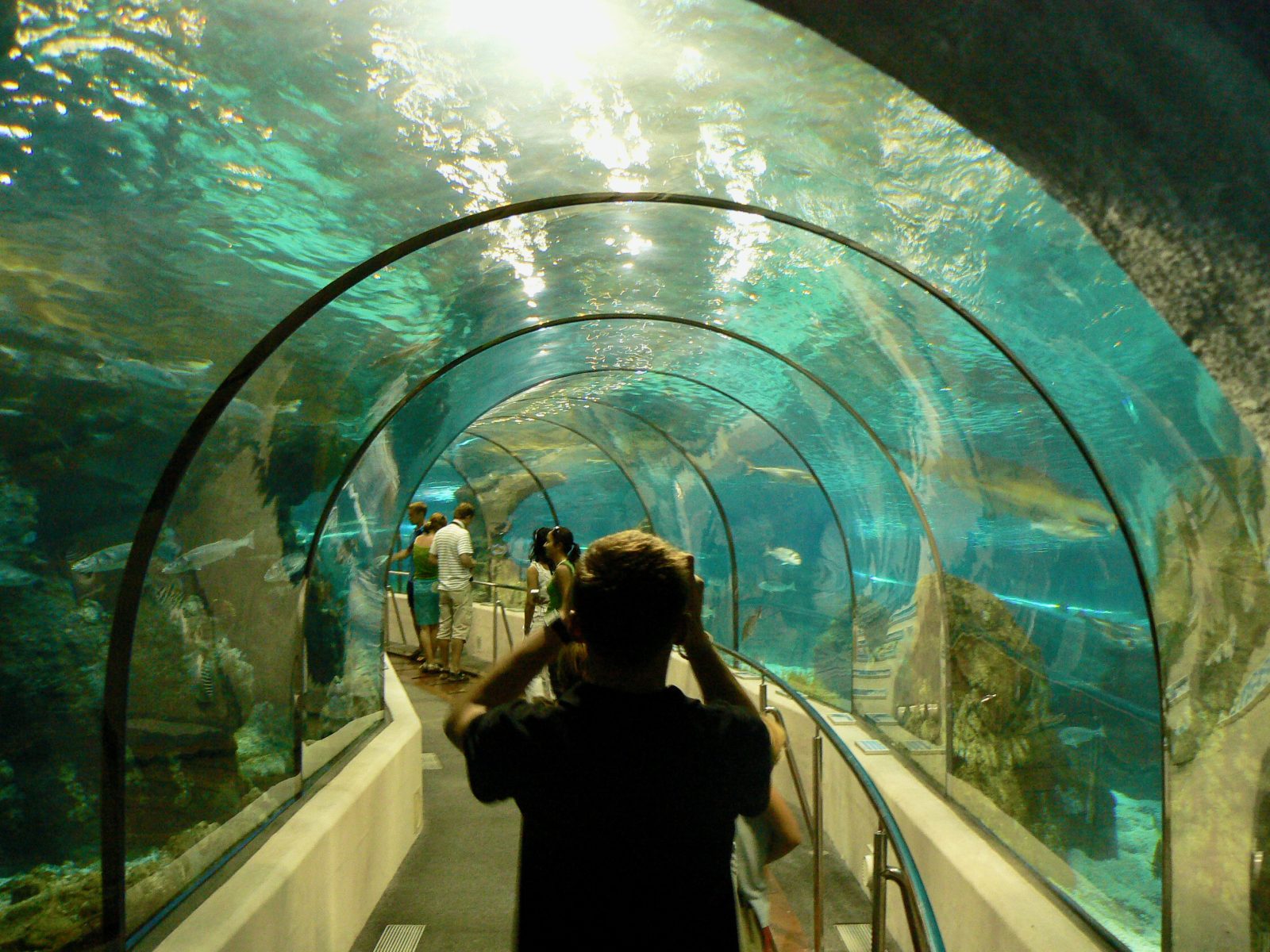
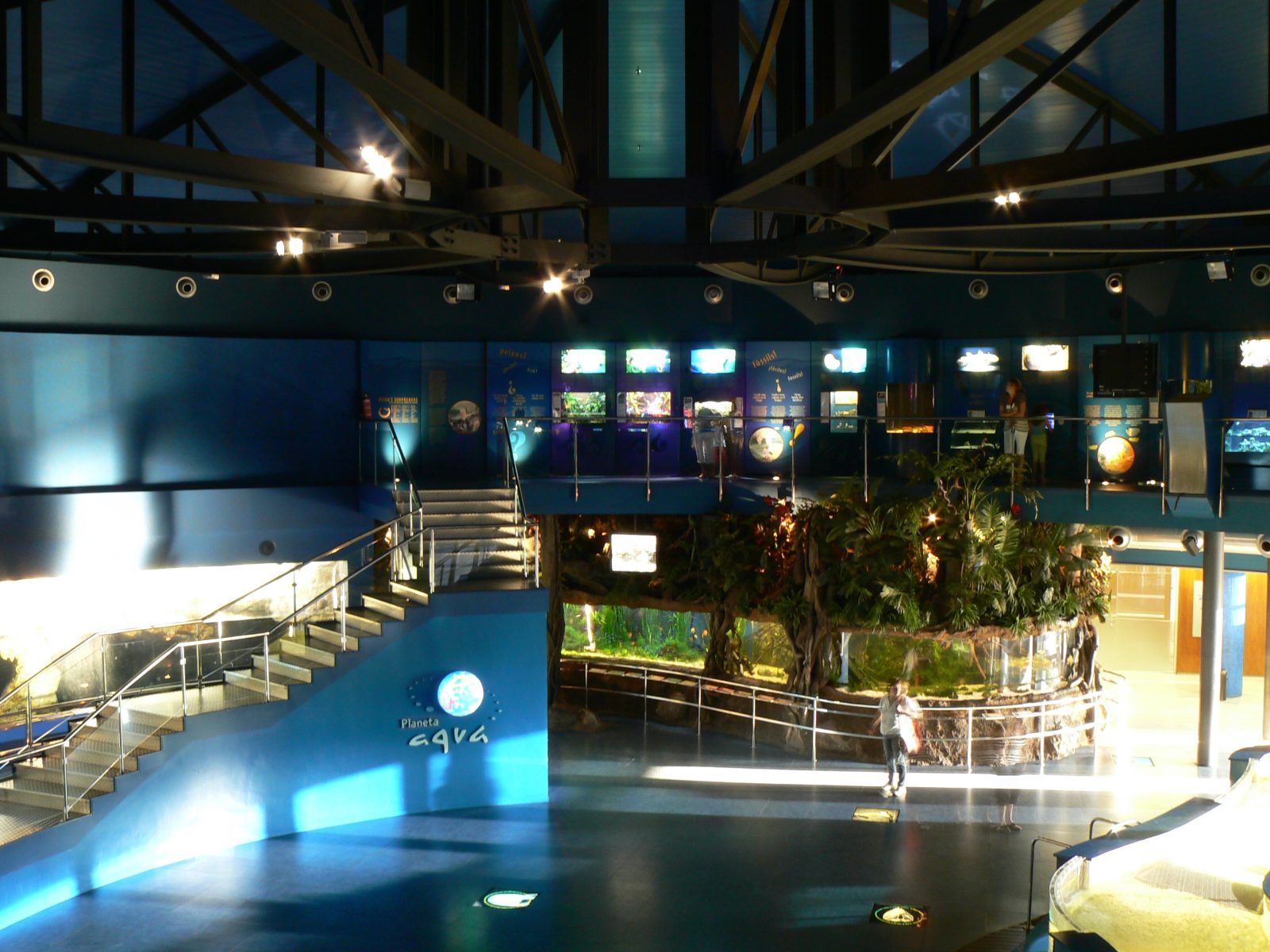
Right by Port Vell, a few steps from Columbus, is the Aquàrium — one of the largest aquariums in the world devoted to the Mediterranean. The main attraction is an eighty-metre glass tunnel: you stand on a moving walkway while sharks and rays glide past above you.
The perfect place for a day when it is pouring, or when the kids have had enough of yet another church.
Climate: when to go
Mediterranean, which means good for most of the year. July and August are hot, humid and full of tourists — doable, but not exactly peak comfort. Winters are mild, rarely below ten degrees.
The best time? May, June and September. Warm, a sea you can swim in, and a city that can still breathe.
What to eat
- Pa amb tomàquet — bread rubbed with tomato, olive oil and salt. Sounds like nothing. It is everything.
- Patatas bravas — potatoes with spicy sauce. Every bar claims theirs are the best. Every one of them is lying except one, which you will not find anyway.
- Bombas de la Barceloneta — fried potato balls stuffed with meat, invented in this very neighbourhood.
- Fideuà — paella's cousin, made with thin noodles instead of rice. Catalans will tell you it is better. They are right.
- Crema catalana — a crisp shell of caramel with cool custard underneath. End of discussion.
What to drink?
Sangria — yes, I know. I will say it quietly: in Barcelona, sangria is mostly drunk by tourists. But it is refreshing, it looks good in a photo and nobody is going to judge you for it. Just pick a place that makes it fresh instead of pouring it out of a carton.
Tinto de verano — this is what the locals drink. Red wine with fizzy lemonade and ice. Simpler, lighter and half the price.
Vermut — in Catalonia this is not a drink, it is a time of day. Sunday late morning, a glass of vermouth over ice, a slice of orange, an olive and a little plate of crisps. The ritual is called fer el vermut and I honestly recommend letting yourself be won over by it.
Cava — Catalan sparkling wine from the Penedès region. Excellent, and a fraction of the price of champagne.
One last thing
Barcelona is not a city you can tick off. You can see every point on the list and come home feeling that something slipped past you — because it did. That hour on the beach with no plan. That side street in El Born. That vermouth that was meant to be just the one.
Leave a few blank spaces in your itinerary. That is where the best part of this city lives.
Useful links
- The city's main official web portal. www.barcelona.cat
- The official tourism service, with a knowledge base on landmarks, tickets and events. thisisbarcelona.com/
- City transport: www.tmb.cat/en/barcelona-transport
Barcelona
ICONIC HOTELS
El Palace Hotel Barcelona
Opened in 1919 as the former Ritz, it is the oldest five-star hotel in Barcelona.
It is the essence of Old World palatial elegance. Legends such as Salvador Dalí (who lived here for years), Joan Miró and Josephine Baker all stayed here. Today you can book special suites dedicated to those artists. It is famous for its enormous 1,500 m² rooftop garden and for having been named the number one city hotel in Barcelona by Travel + Leisure.
W Barcelona
Known to locals as "Hotel Vela" (the Sail Hotel) because of its distinctive shape.
Designed by the world-renowned architect Ricardo Bofill, the building has become a modern symbol of the Barcelona skyline and a permanent fixture of the seafront. It is the only hotel in the city with direct access to the beach, and its iconic NOXE club on the 26th floor offers a spectacular 360-degree view over the Mediterranean and the whole city.
Hotel Arts Barcelona
The tallest hotel on Barcelona's seafront (44 floors), built specially for the 1992 Olympic Games.
It is a masterpiece of modern steel-and-glass architecture, with Frank Gehry's giant golden fish sculpture ("El Peix") at its feet. The hotel combines a seaside resort with big-city luxury. It houses the two-Michelin-star restaurant Enoteca Paco Pérez, and its new Skyline Suites offer a unique view that frames the towers of the Sagrada Família perfectly.
Majestic Hotel & Spa Barcelona
A neoclassical hotel in business since 1918, on the luxurious Passeig de Gràcia avenue.
It is nicknamed "the Art Hotel" for its private collection of more than a thousand works by masters such as Antoni Tàpies and Anish Kapoor. It regularly wins awards for the best historic hotels in Europe. It has the largest presidential suite in the city (the 467 m² Royal Penthouse) and the iconic La Dolce Vitae terrace, where you can admire the Sagrada Família over a glass of wine.
Cotton House Hotel (Autograph Collection)
A five-star boutique hotel set in a 19th-century neoclassical palace that was once the headquarters of the Cotton Manufacturers' Guild.
It is a design icon that blends historic architecture with a modern touch to perfection. Original period features have been preserved inside: marble staircases, painted ceilings and the famous suspended spiral staircase from 1957. The hotel's most unusual service is "L'Atelier" — the chance to order a made-to-measure shirt from the tailors of the prestigious Barcelona fashion house Santa Eulalia, right there in the hotel's salon.
Barcelona
Gallery
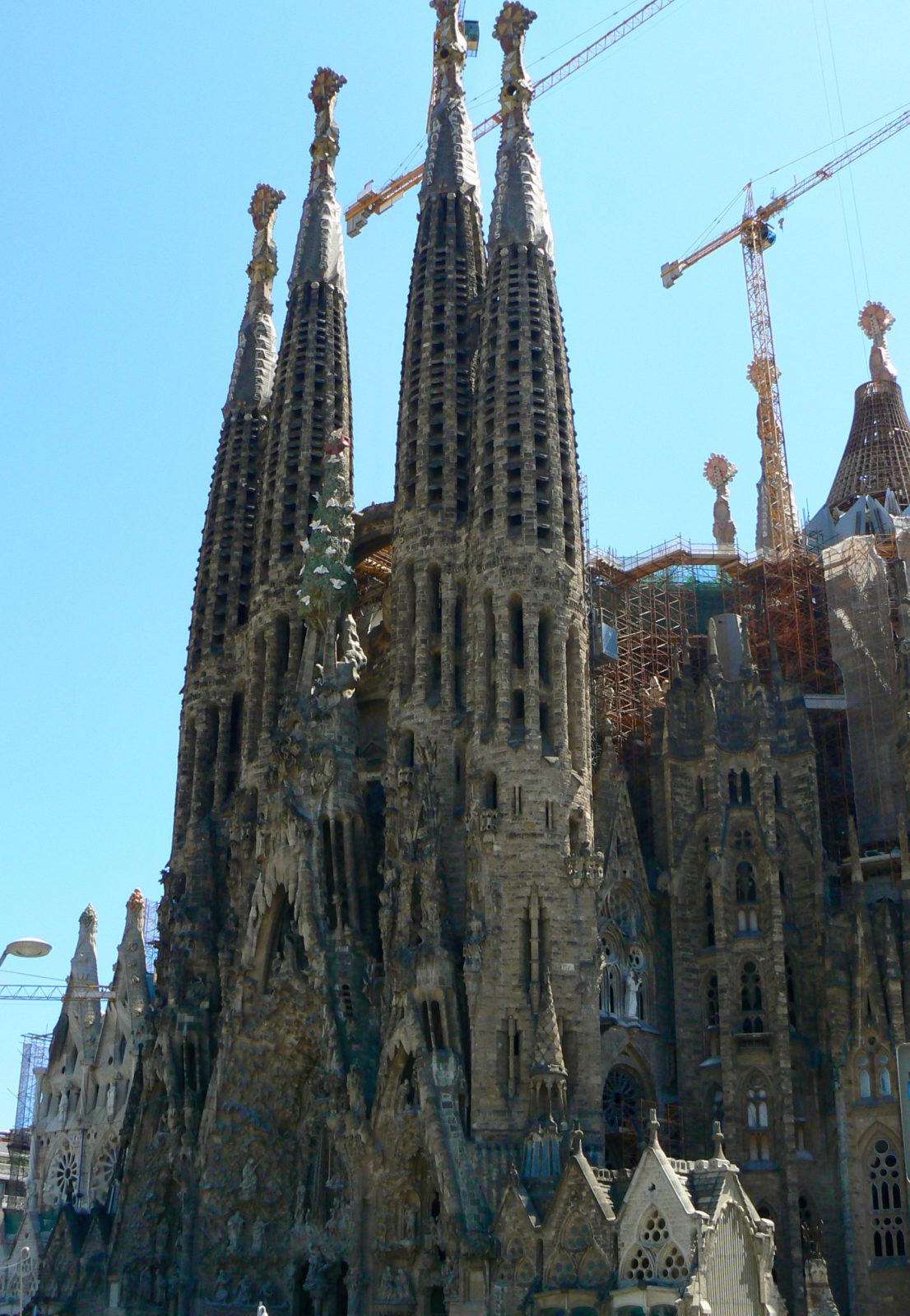
Sagrada Família
Sagrada Família (Basílica de la Sagrada Família)
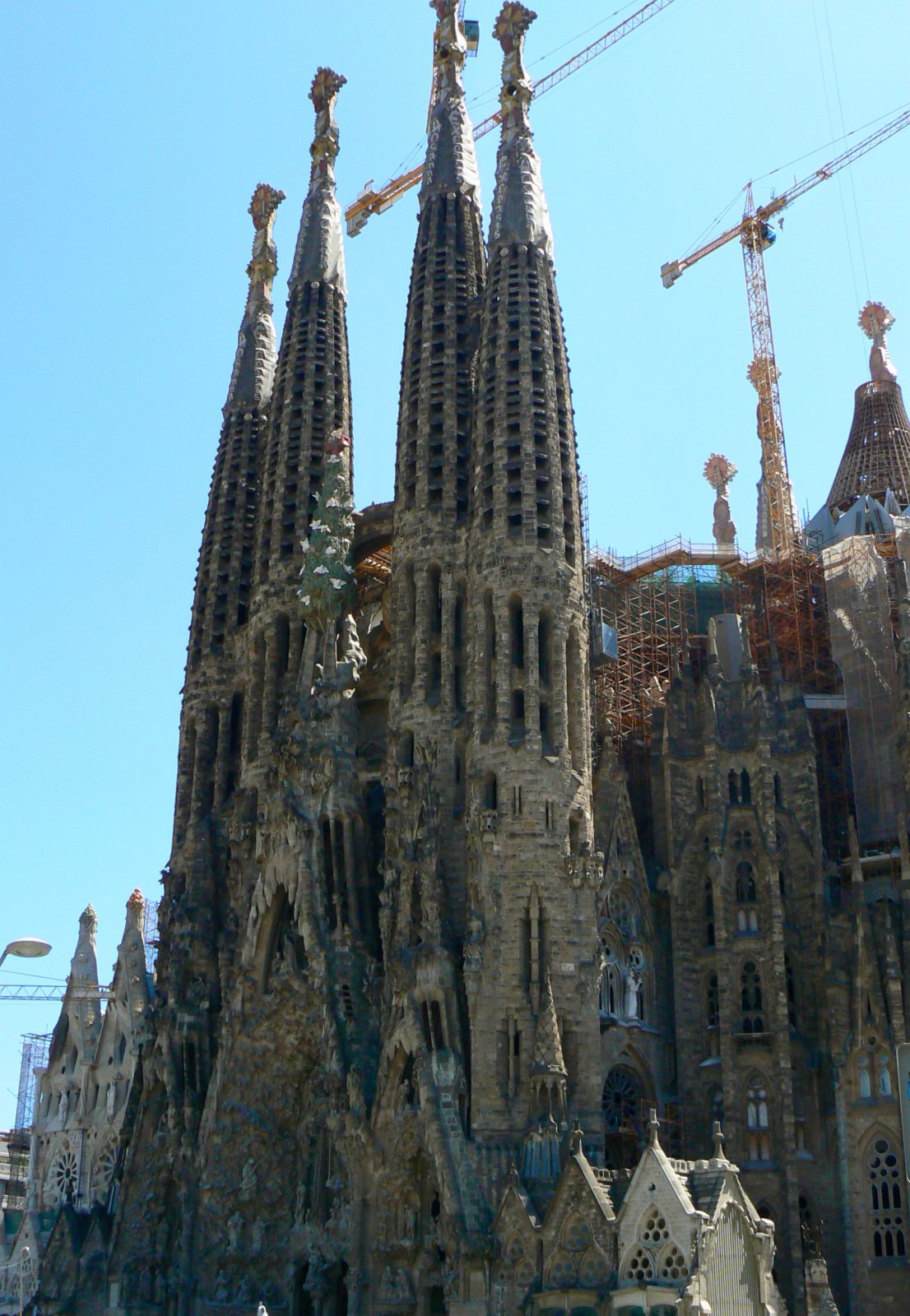
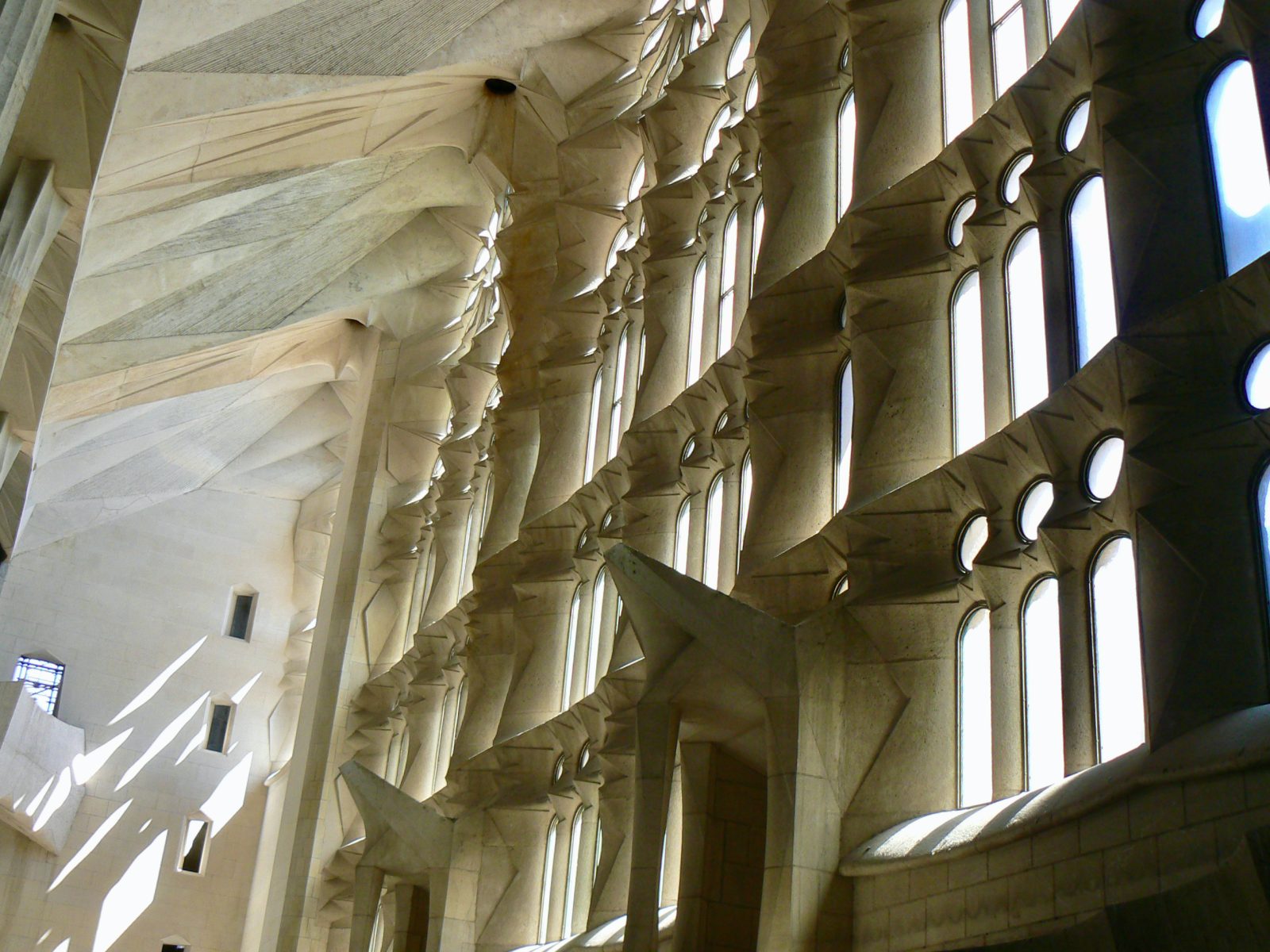
This is an absolute masterpiece of architecture and the most recognisable symbol of Barcelona and of Spain as a whole. The monumental Roman Catholic basilica astonishes people from all over the world with a form that looks more like an organic sculpture than a traditional church.
Antoni Gaudí's genius and philosophy: The temple is the life's work of the brilliant Catalan architect Antoni Gaudí. He took over the project in 1883 and redefined it completely, combining the Gothic style with the flowing lines of Art Nouveau. Gaudí was deeply religious and drew his inspiration from nature. He designed the interior of the basilica to resemble a vast forest of stone. Mighty columns branch out beneath the ceiling like the crowns of trees, and the extraordinary stained glass lets in a blaze of colour that changes with the time of day.
"My client is in no hurry": Construction has been going on without a break since 1882, which makes it the longest-running active building site in the world. The architect himself knew perfectly well that he would not live to see it finished. When critics and impatient locals asked him why the work was going so slowly, Gaudí would reply with his customary calm: "My client has no reason to hurry. God has all the time in the world."
The master's tragic, lonely end: In his later years Gaudí became so absorbed in building the basilica that he stopped caring about any worldly comfort at all. He gave his fortune to the construction fund, abandoned his elegant clothes, lived modestly on the building site and dressed like a pauper. That asceticism led to a profoundly moving tragedy. On 7 June 1926, on his daily walk to church, the 73-year-old architect was struck by a tram. Because of his ruined clothes, lack of documents and unkempt appearance, nobody recognised him and he was taken for a homeless beggar. Taxi drivers refused to take him to a clinic, so he ended up in a squalid hospital for the poor. It was only the next day that the Sagrada Família's chaplain found him there. When he was offered a transfer to a private hospital, Gaudí refused, saying: "My place is here, among the poor." He died three days after the accident.
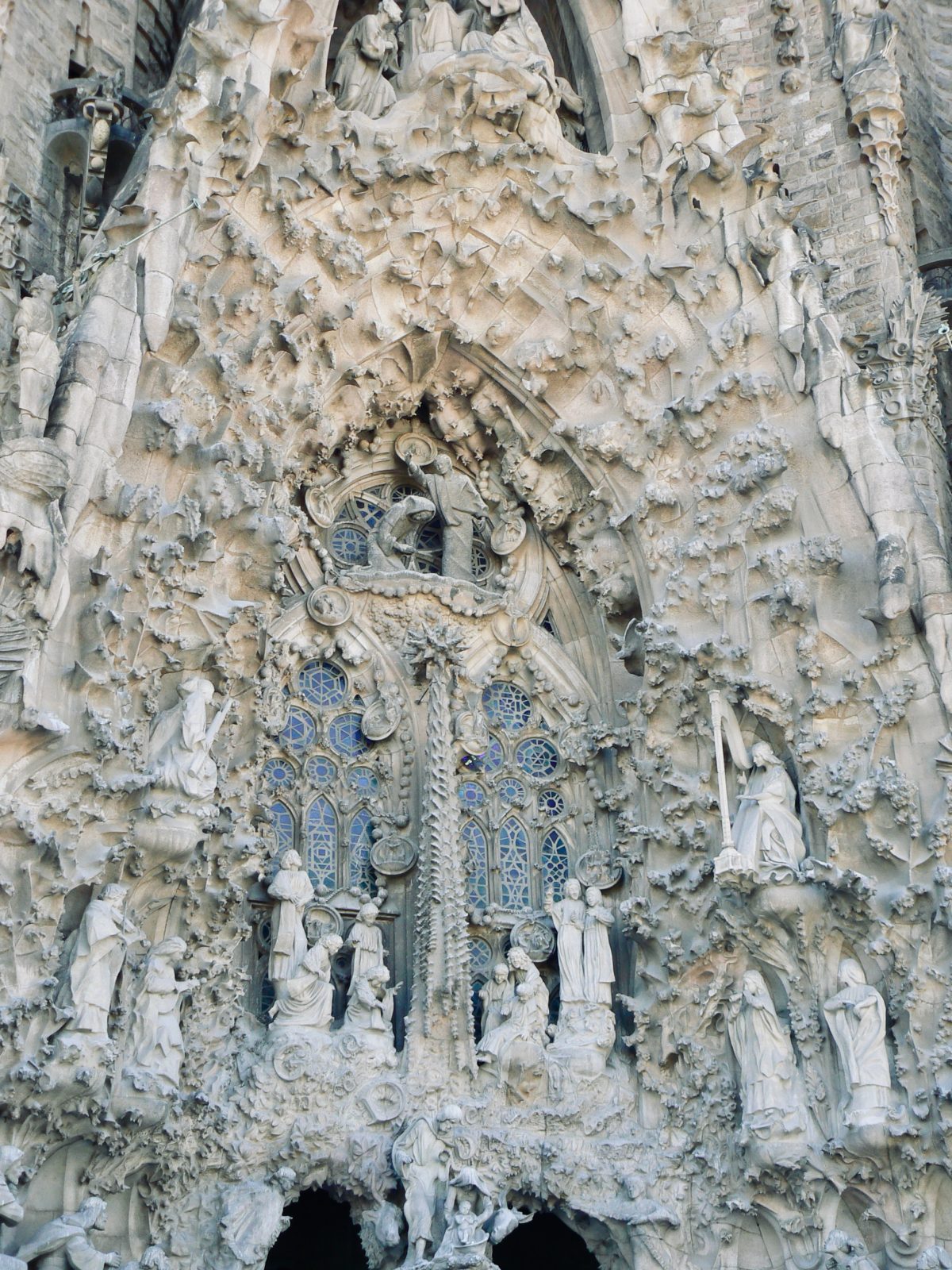
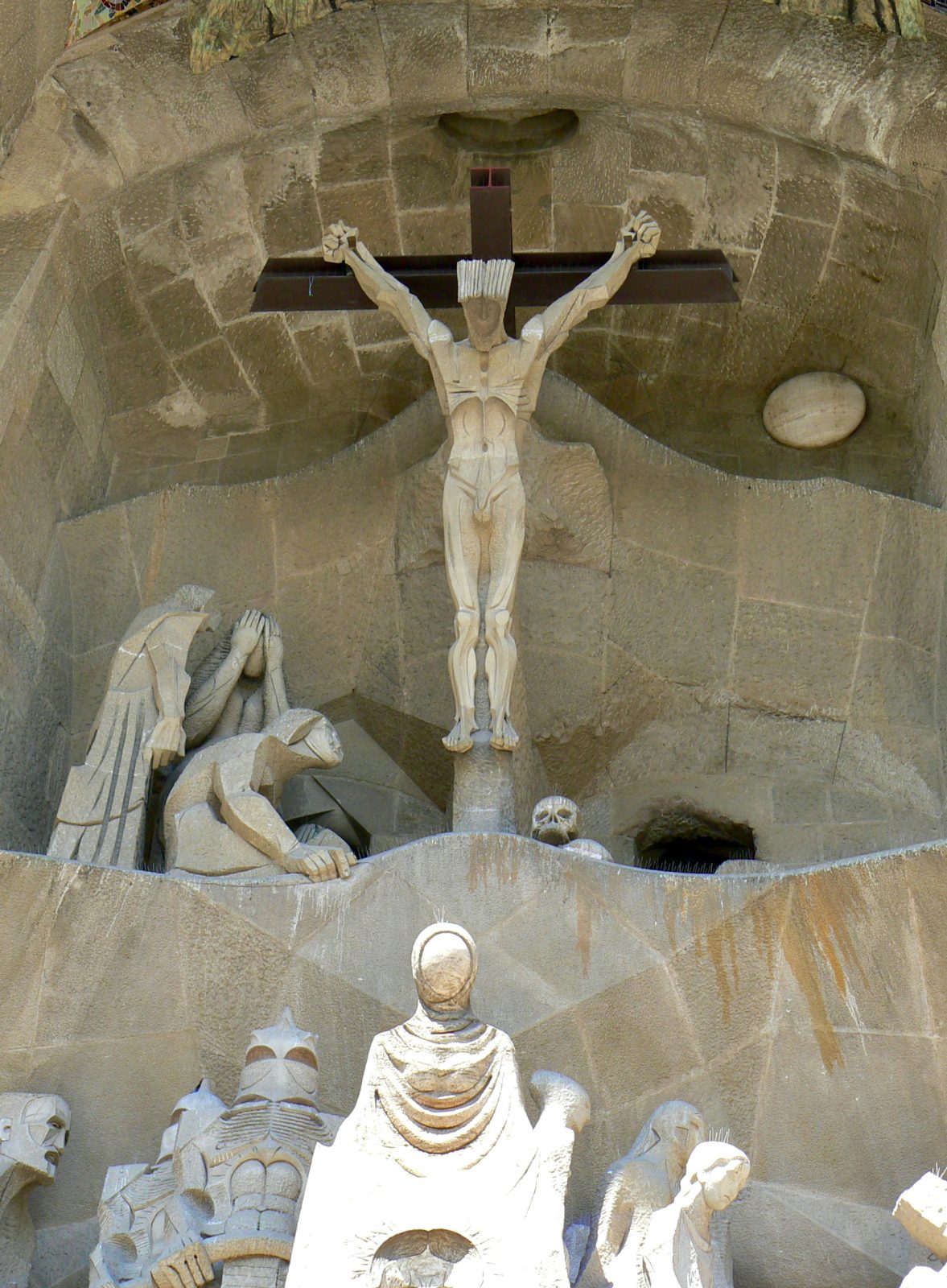
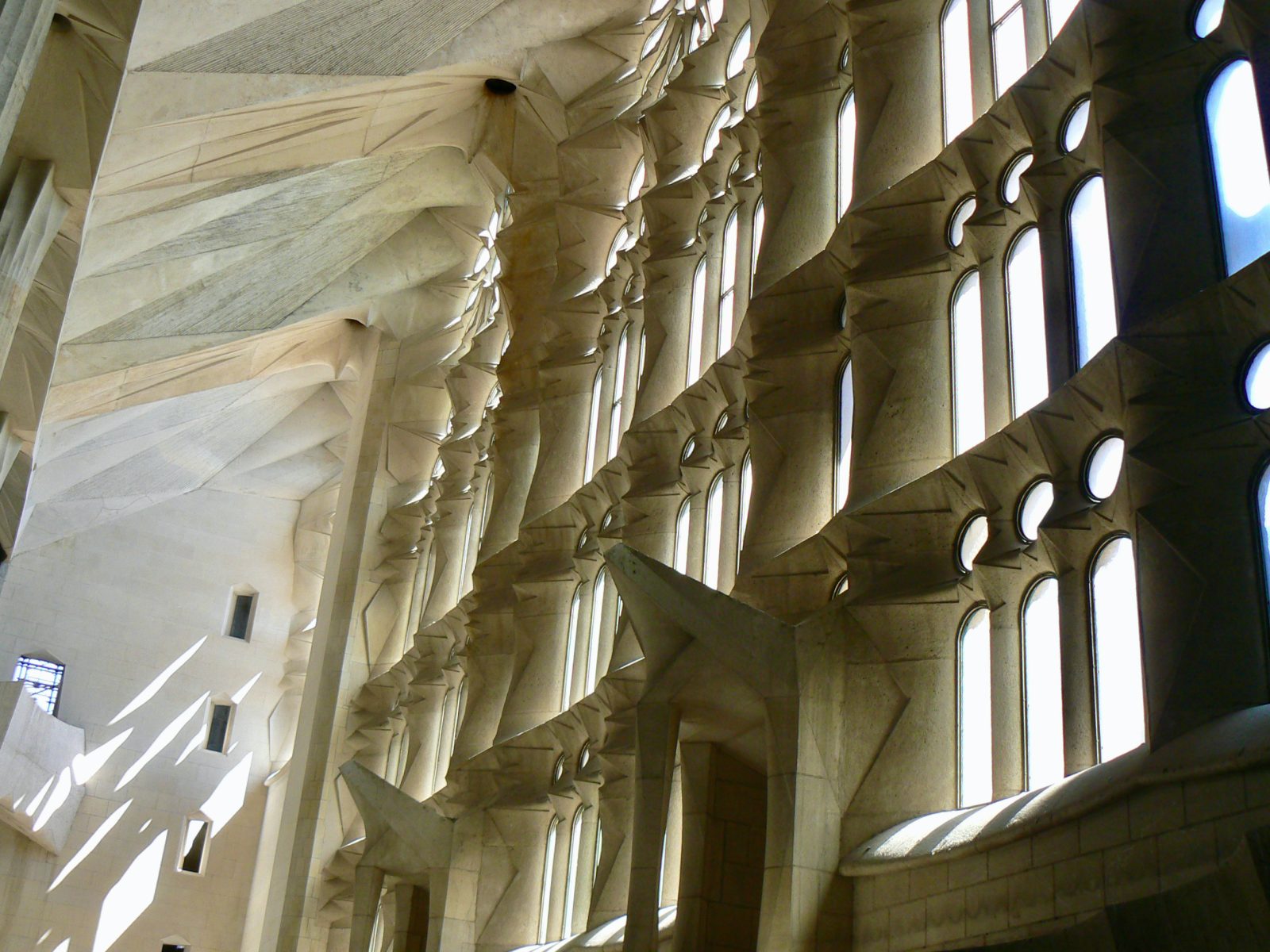
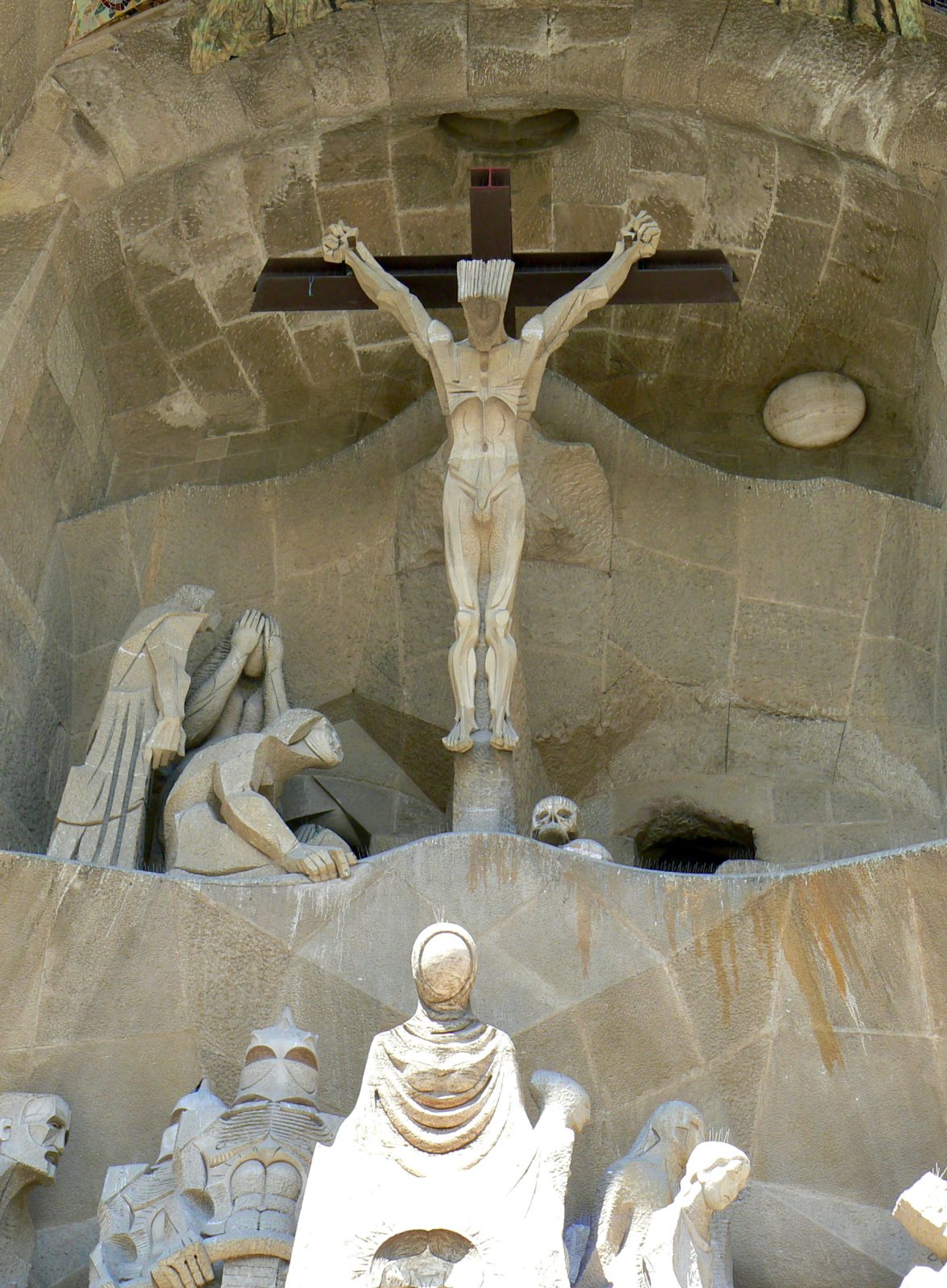
Façades full of symbols: The temple is ultimately to have three great façades. The oldest of them, the Nativity Façade (Fachada del Nacimiento), is the only one built largely during the architect's lifetime, and it is extraordinarily rich in floral and animal detail.
Visitor tip: You cannot buy tickets on site at the box office — entry is available online only, and it sells out weeks in advance. If you are planning a trip, booking a ticket is the absolute priority. It is worth going down to the crypt to see how the genius designed the individual elements of the temple.
Official website: All ticket types (including options with access to the viewing towers or an audio guide) can be bought safely on the official site: sagradafamilia.org/
The Columbus Monument
The Columbus Monument (Mirador de Colom)
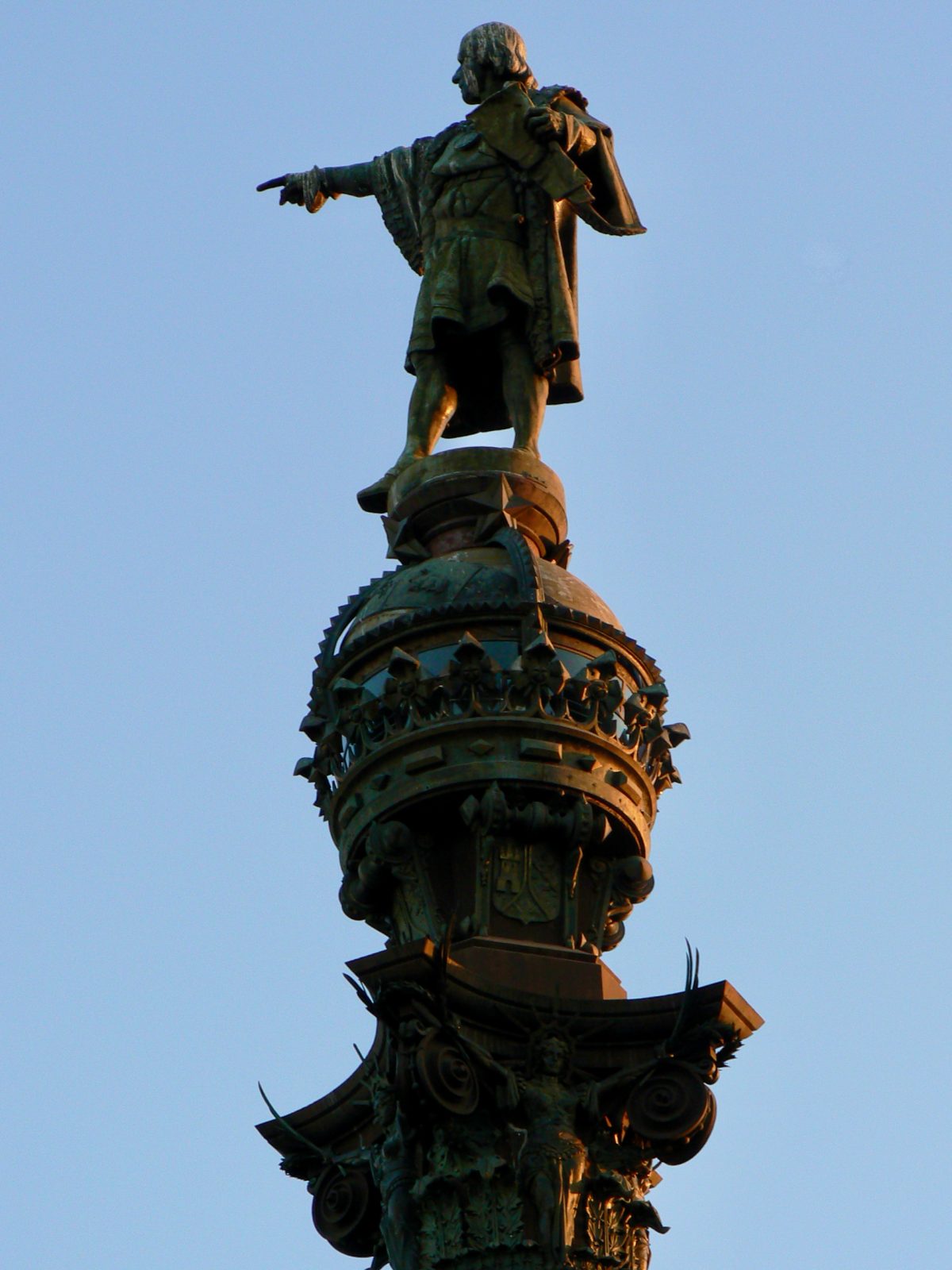
This majestic 60-metre structure, standing exactly where the famous La Rambla promenade meets the sea, is one of the most recognisable symbols of Barcelona. The monument was built for the World's Fair of 1888 and commemorates the explorer's return to Spain after his first voyage to America — it was here that Columbus reported on his journey to the royal couple, Isabella and Ferdinand.
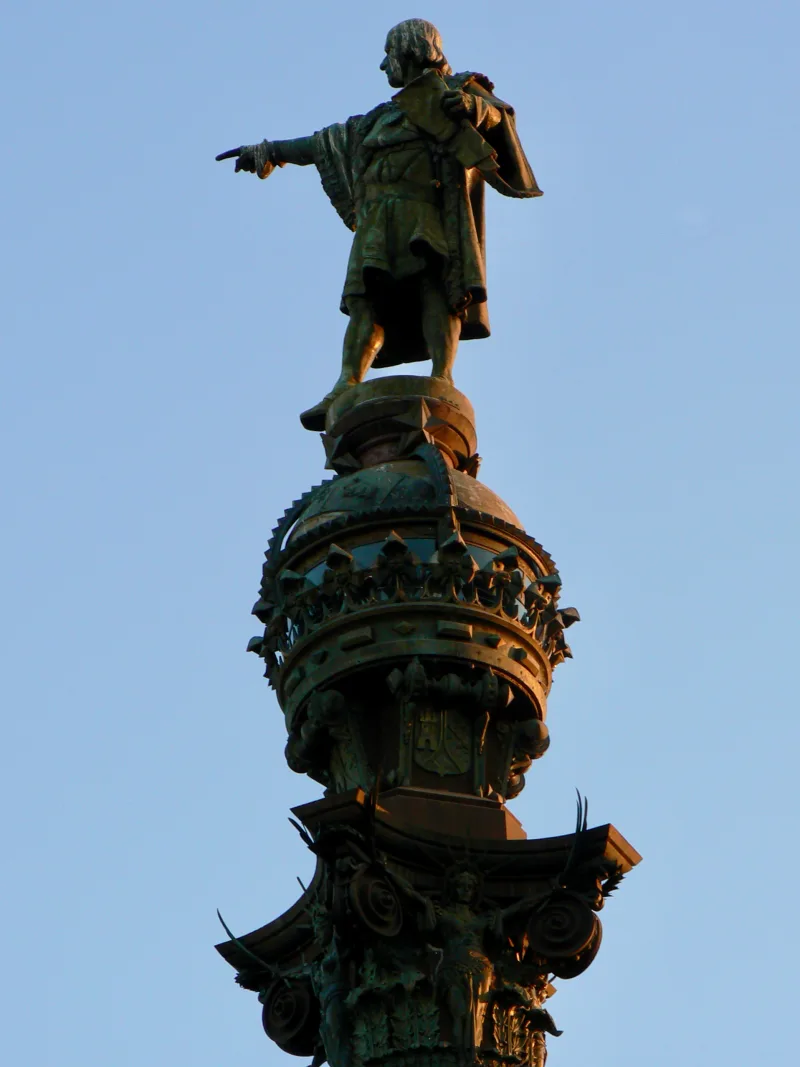
Mirador de Colom
-Location: Plaça Portal de la Pau (at the southern end of La Rambla). Architecture and detail: the base of the monument is a richly decorated stone pedestal covered in bas-reliefs, and eight mighty cast-iron lions stand proud guard at its foot.
-A geographical myth: There is a popular piece of tourist trivia attached to the monument. Although the 7-metre bronze Columbus stretches out his arm and points a finger at the horizon, contrary to common belief he is not pointing at the New World at all! In fact his finger is aimed south-east, towards the Mediterranean.
-Visitor tip: Few people know that a small lift is hidden inside the Corinthian column. For a few euros it will take you right to the top, to a viewing platform just beneath the statue's feet, with a spectacular 360-degree panorama over the historic Port Vell harbour and the Gothic Quarter.
-Pro tip: The viewing space at the top is very cramped and intimate, so it is worth planning your trip up for the morning hours to avoid the queues.
Magic Fountain
The Magic Fountain of Montjuïc (Font Màgica)
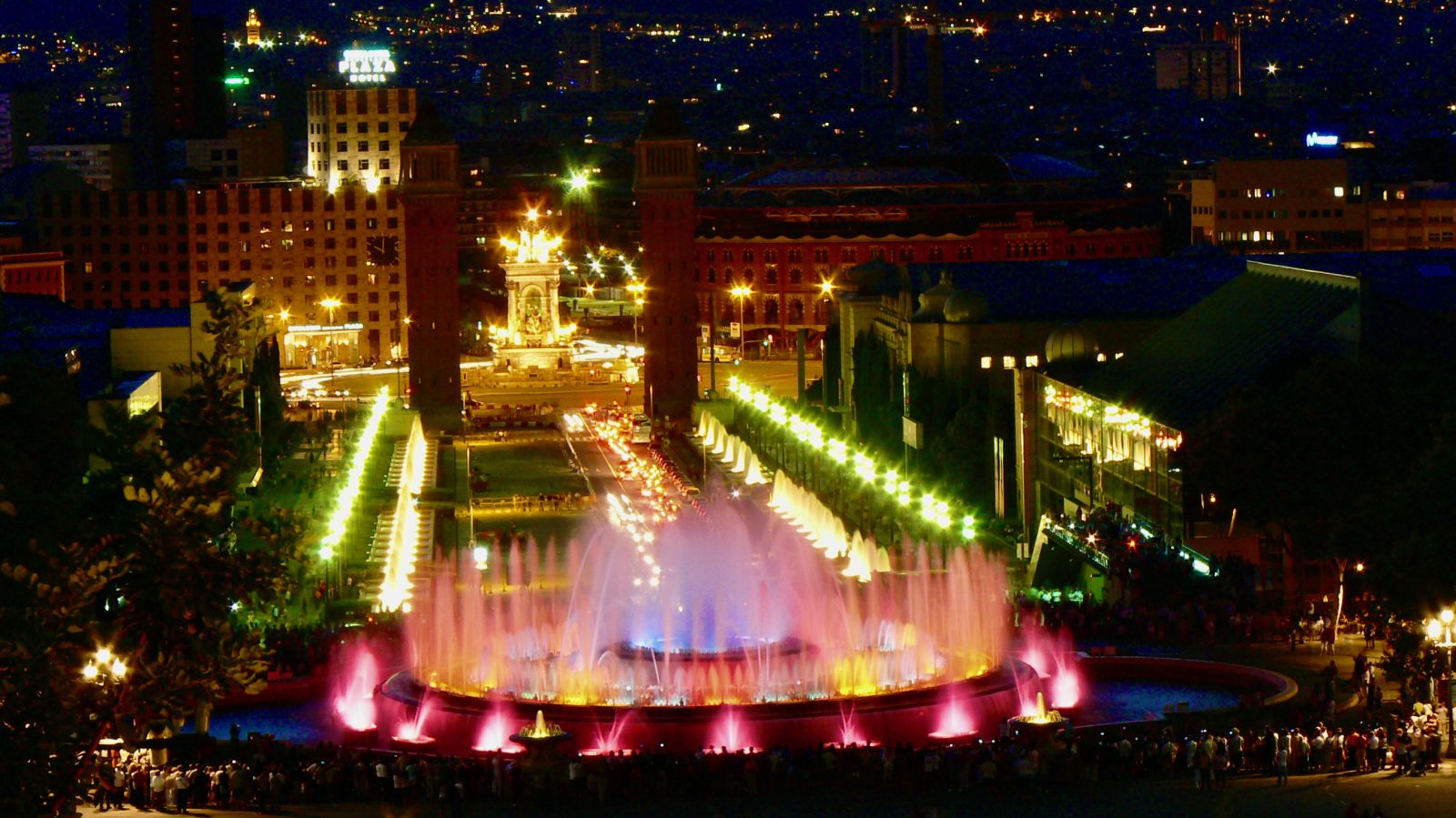
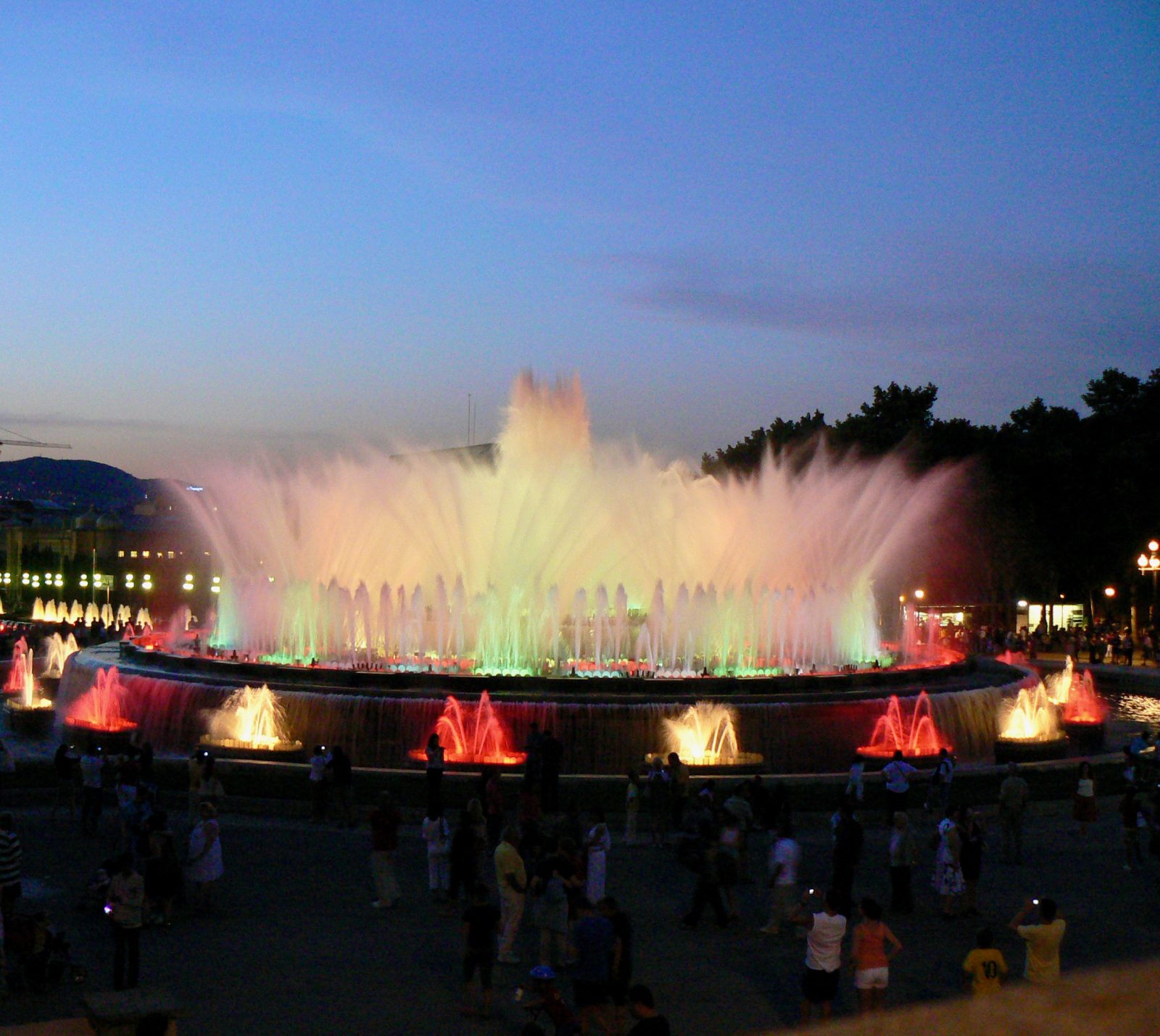
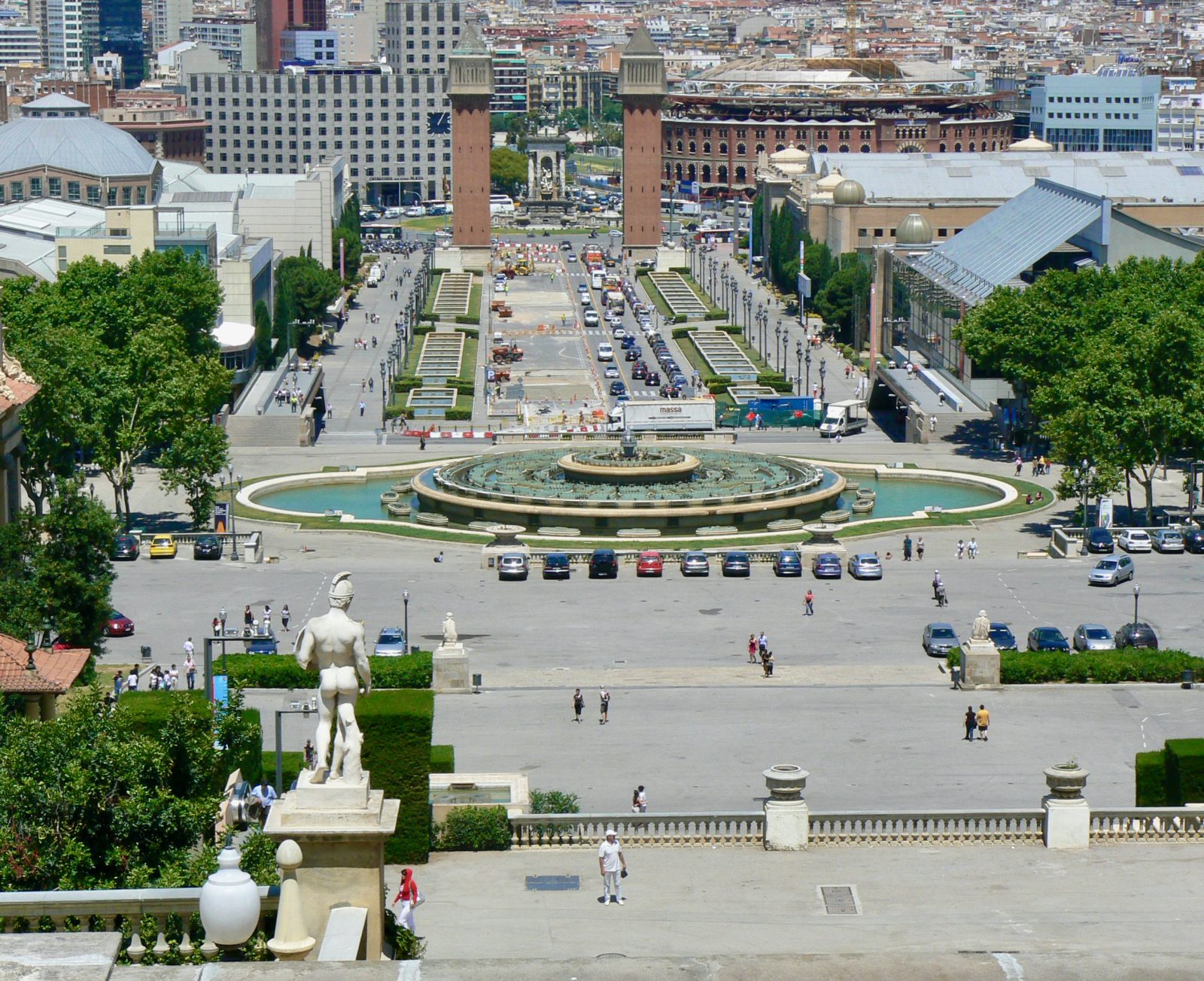
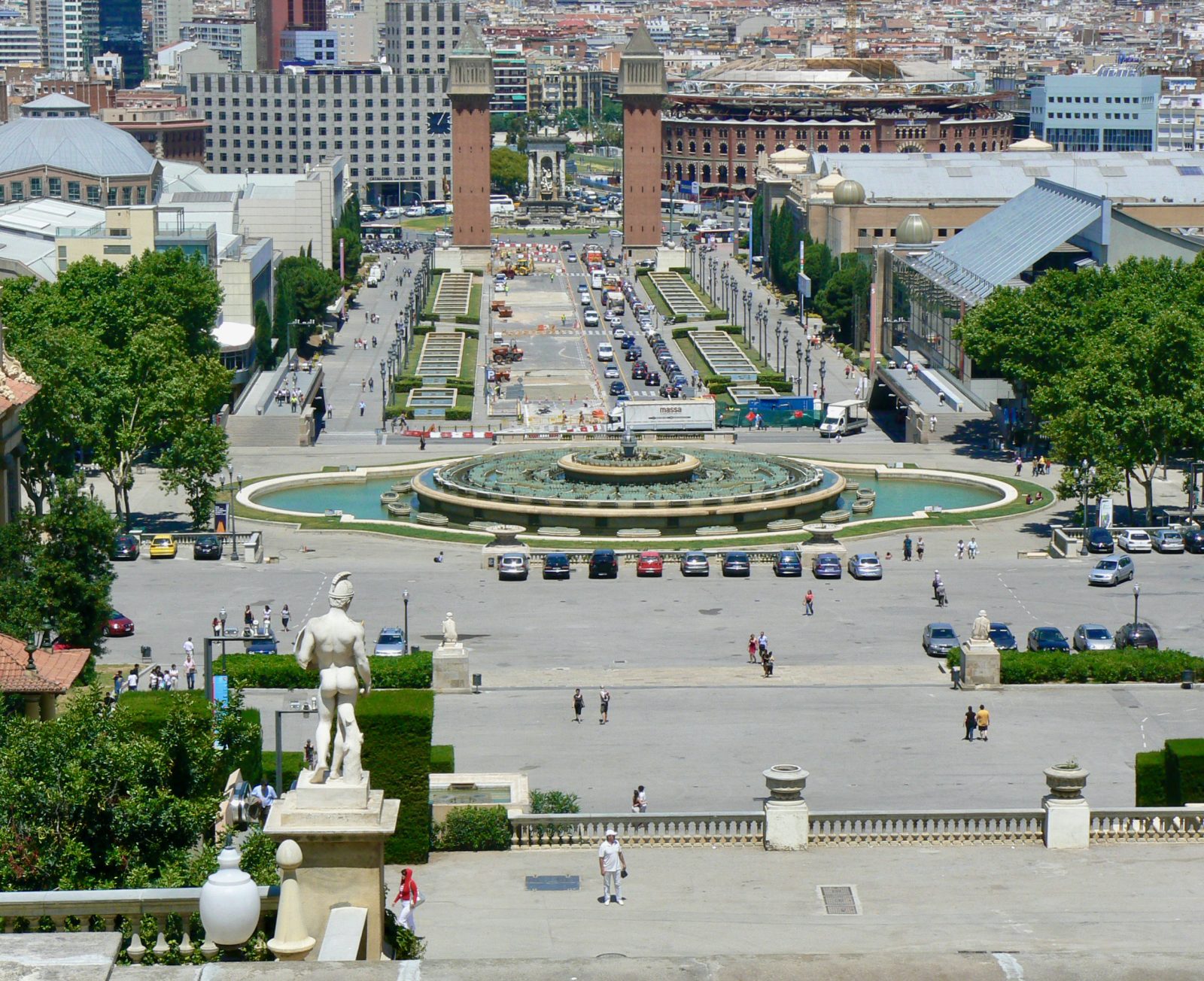
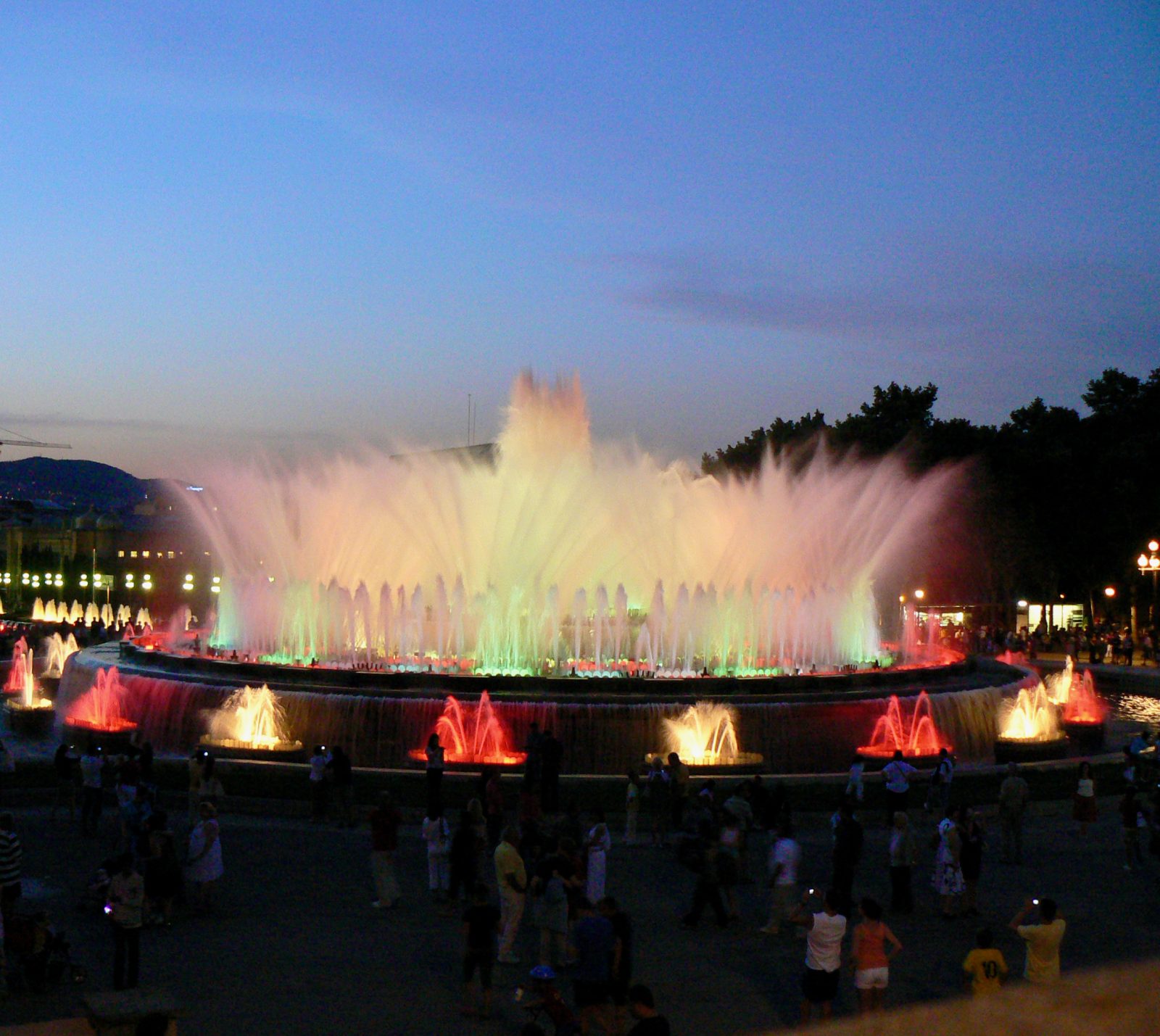
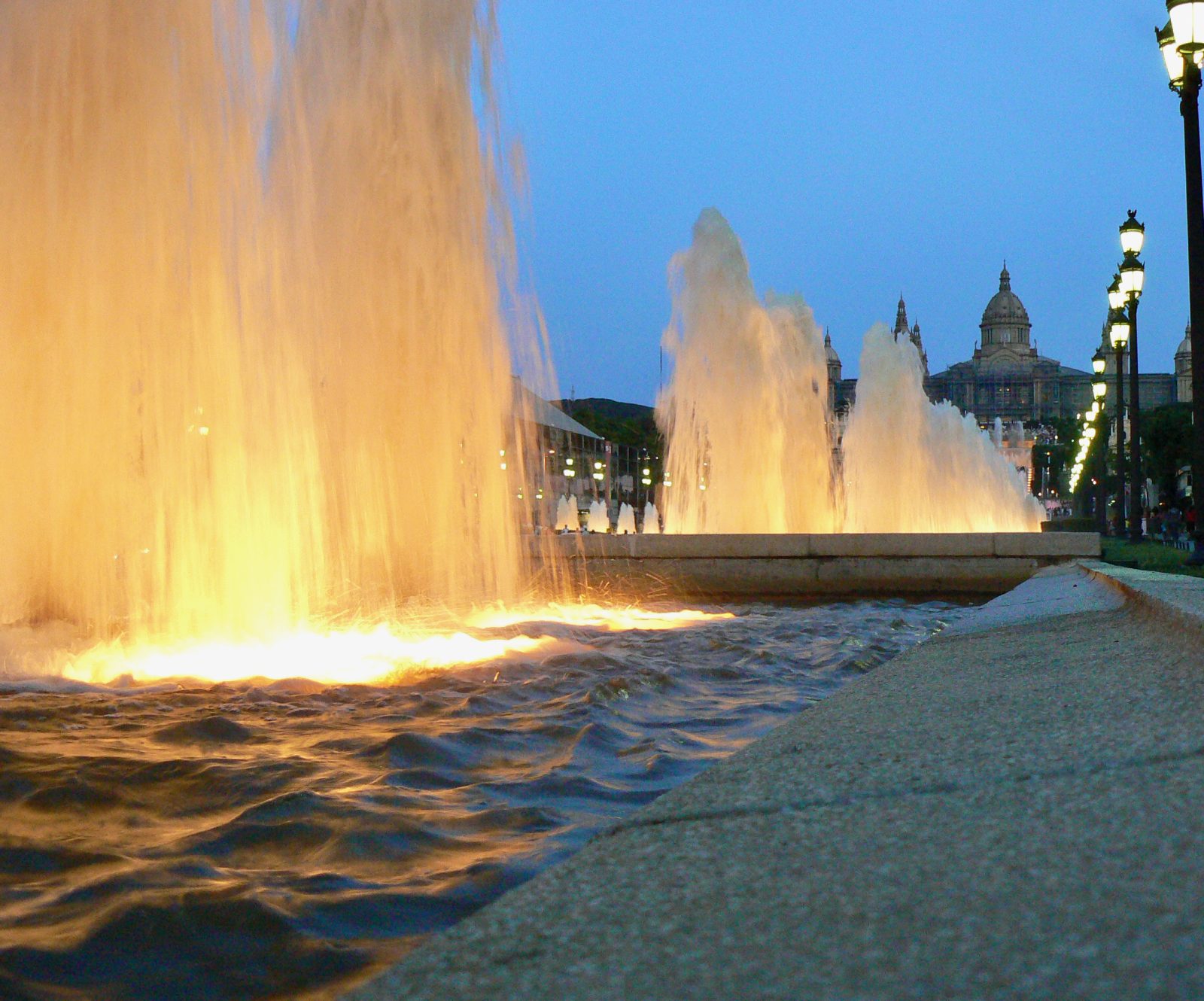
Set at the foot of the majestic Palau Nacional by Plaça d'Espanya, the Magic Fountain is an absolute must-see on any evening itinerary. It is a spectacular open-air show that brilliantly combines dynamic jets of water, play of light and music — from classical pieces to modern pop and rock. Best of all, the shows are completely free and no tickets are needed!
A grand return after years of drought: If you are reading older guidebooks, you may come across the information that the fountain is switched off. It is true that the shows were suspended for several years because of the catastrophic drought in Catalonia. Happily, the fountain has resumed its regular shows, so visitors can once again enjoy this exceptional spectacle.
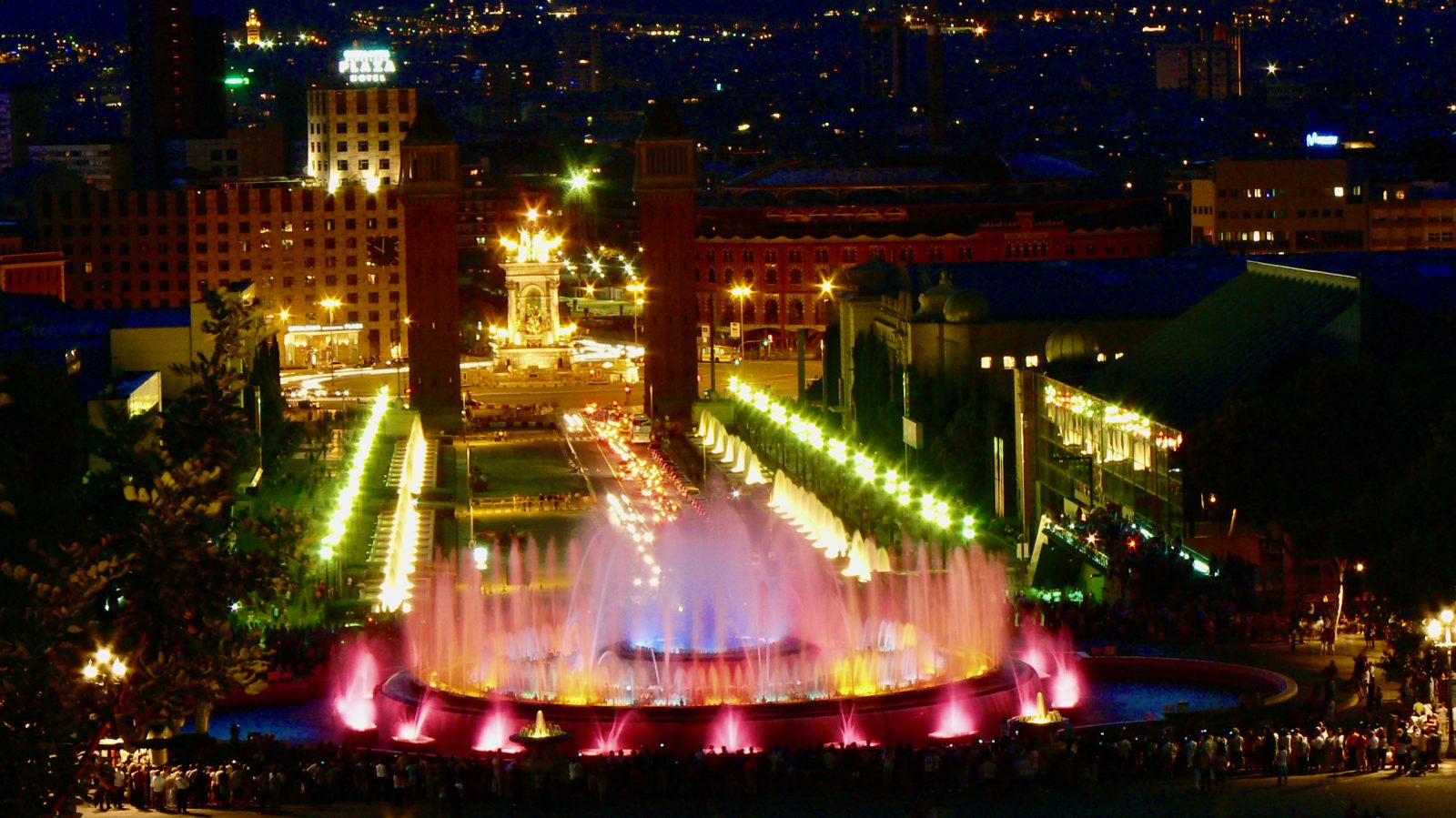
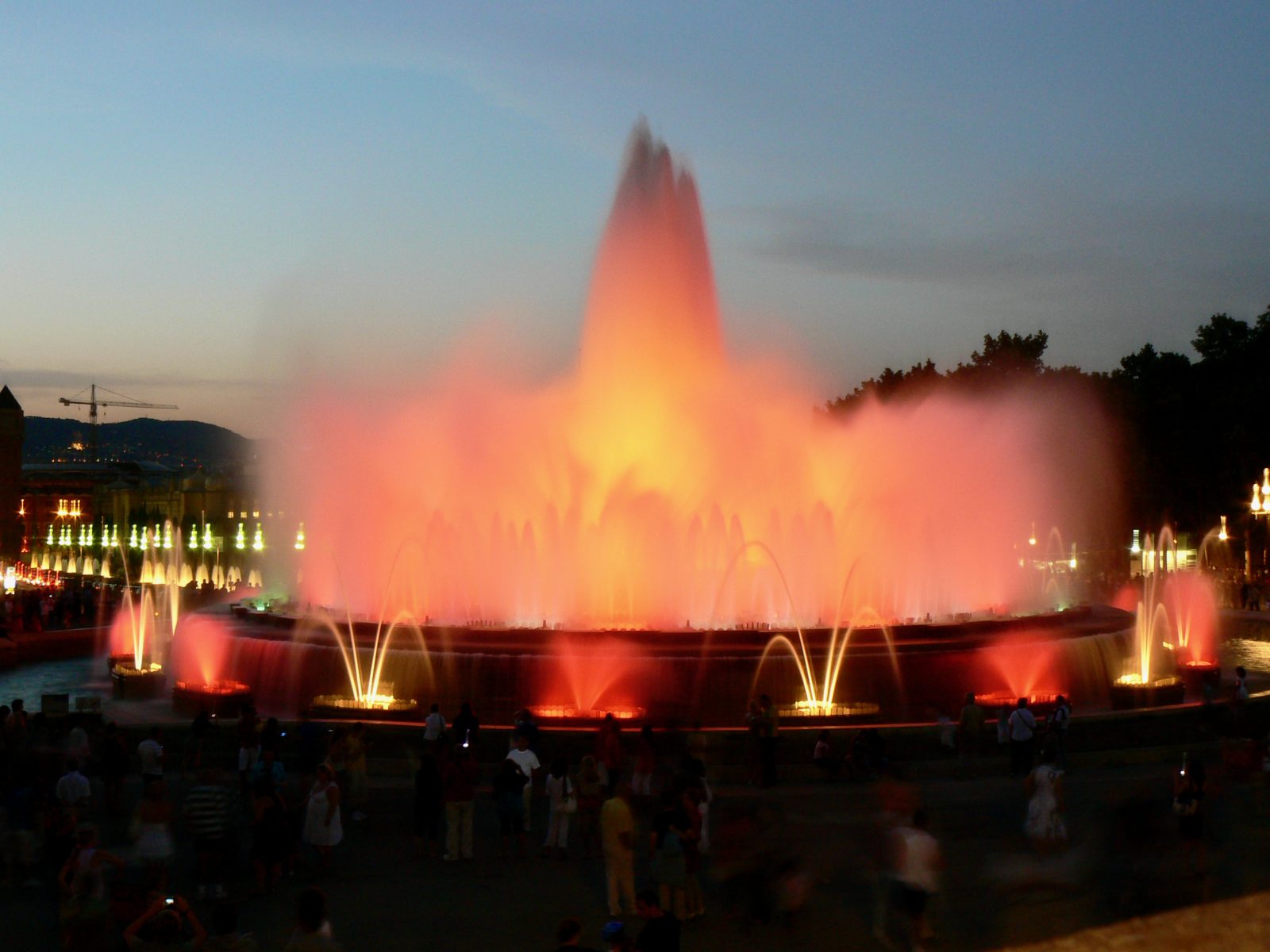
When is the best time to go?
The days and times of the shows vary with the season and the length of the day:
Summer season (1 June to 30 September): Shows run from Wednesday to Sunday. The first starts at 9:30 p.m., the next at 10:00 p.m. This is the ideal time, because the show begins just after sunset, which gives the best visual effects.
Winter and spring season (1 November to 31 May): Show days are limited to Thursdays, Fridays and Saturdays. Because dusk falls earlier, the shows start earlier too — at 9:00 p.m. and 9:30 p.m.
Maintenance break: Remember that every February the fountain goes through its annual technical maintenance. Check the official Barcelona website barcelona.cat
Tips
Claim your spot early: Although the show is visible from many places, the best viewpoints fill up in no time. It is worth arriving 15–30 minutes before it starts.
The secret viewpoint (pro tip): Instead of standing in the crowd at the bottom, right by the fountain, climb higher, up the steps leading to the National Museum (MNAC). From up there you get an incredible view of the illuminated fountain, the water cascades and Avinguda de la Reina Maria Cristina stretching away in the background.
Watch out for pickpockets: Just as on La Rambla, the fountain shows — where the attention of hundreds of tourists is fixed on the lights — make it easy to become a target for thieves. Keep an eye on your backpack and your phone!
September's special show: If you are planning a trip for the end of September, do aim for the days around the La Mercè festival. The closing show (the so-called Piromusical) is combined with a huge display of fireworks and lasers.
Official announcements: Times can occasionally change because of the weather. It is worth glancing at the city's official website before you head out: barcelona.cat
Aquarium
Barcelona Aquarium (L'Aquàrium de Barcelona)
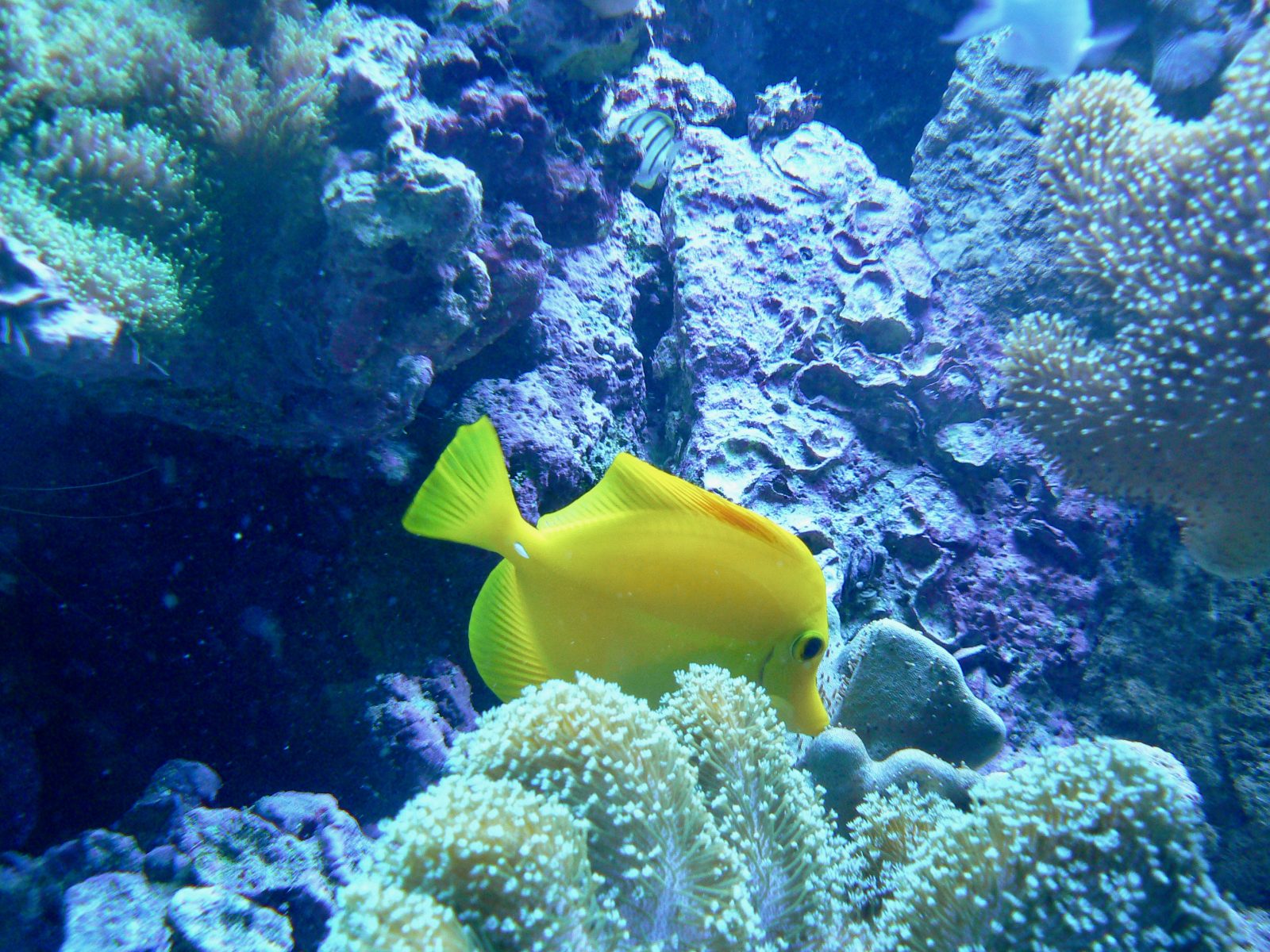
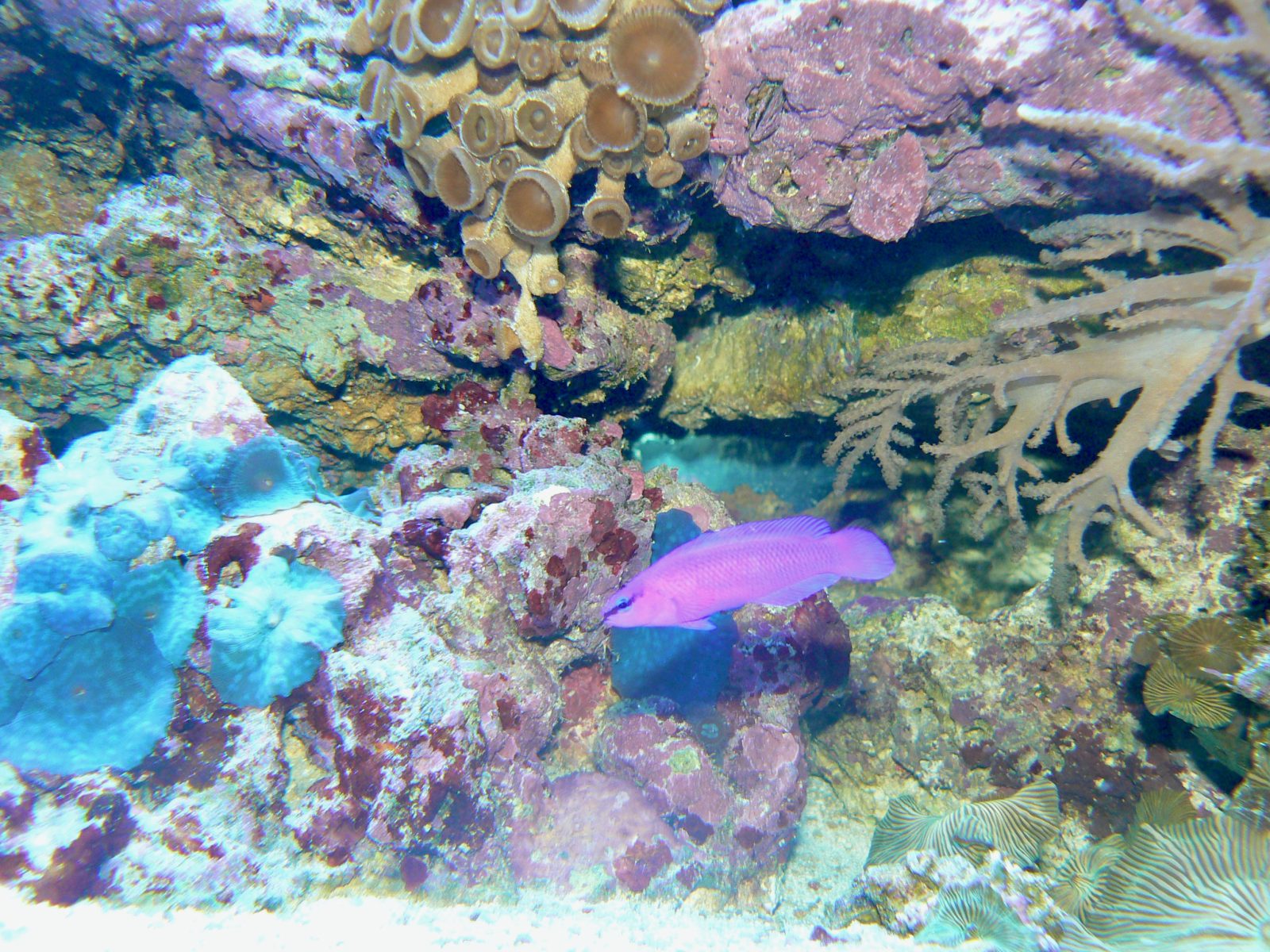
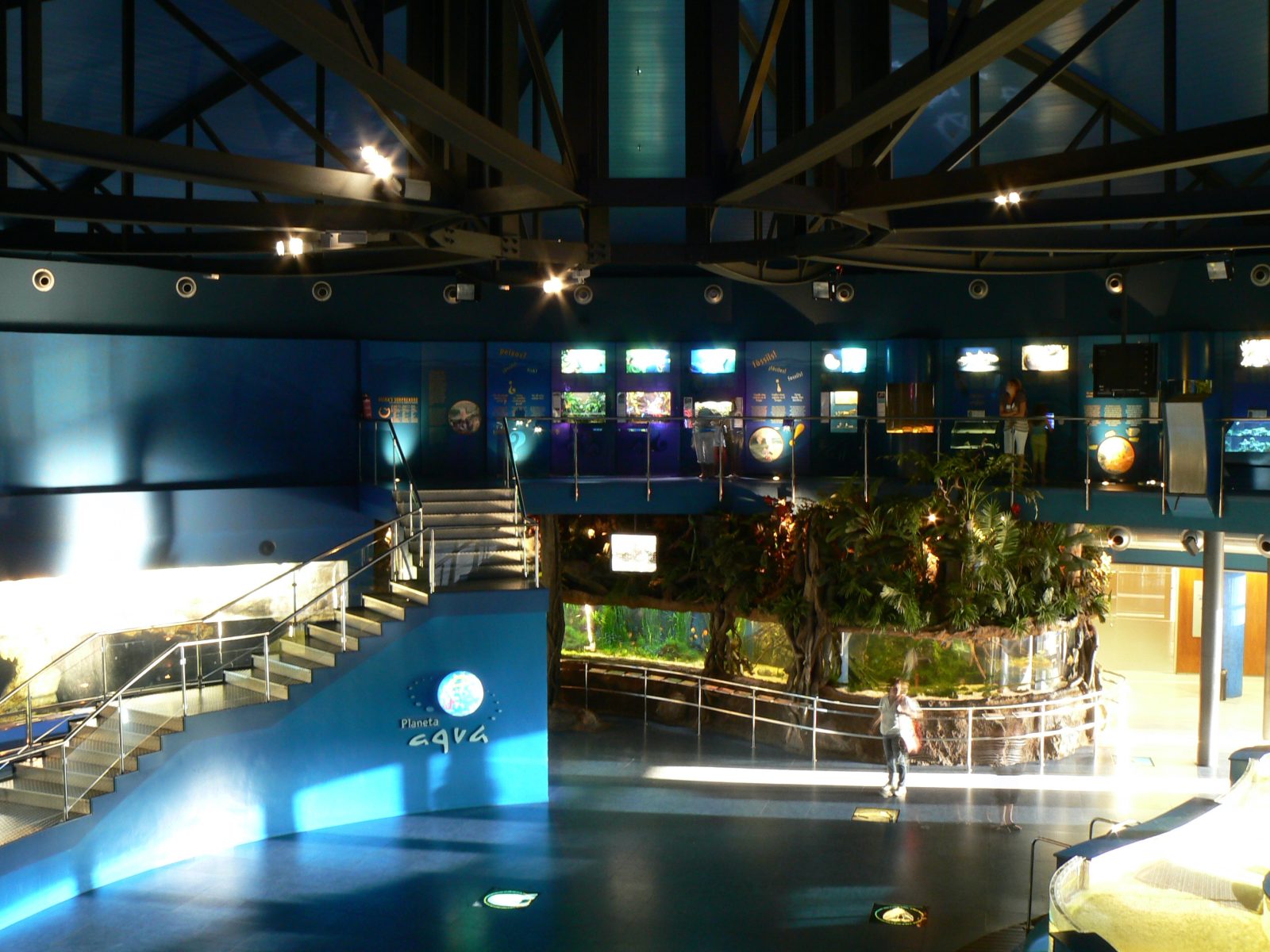
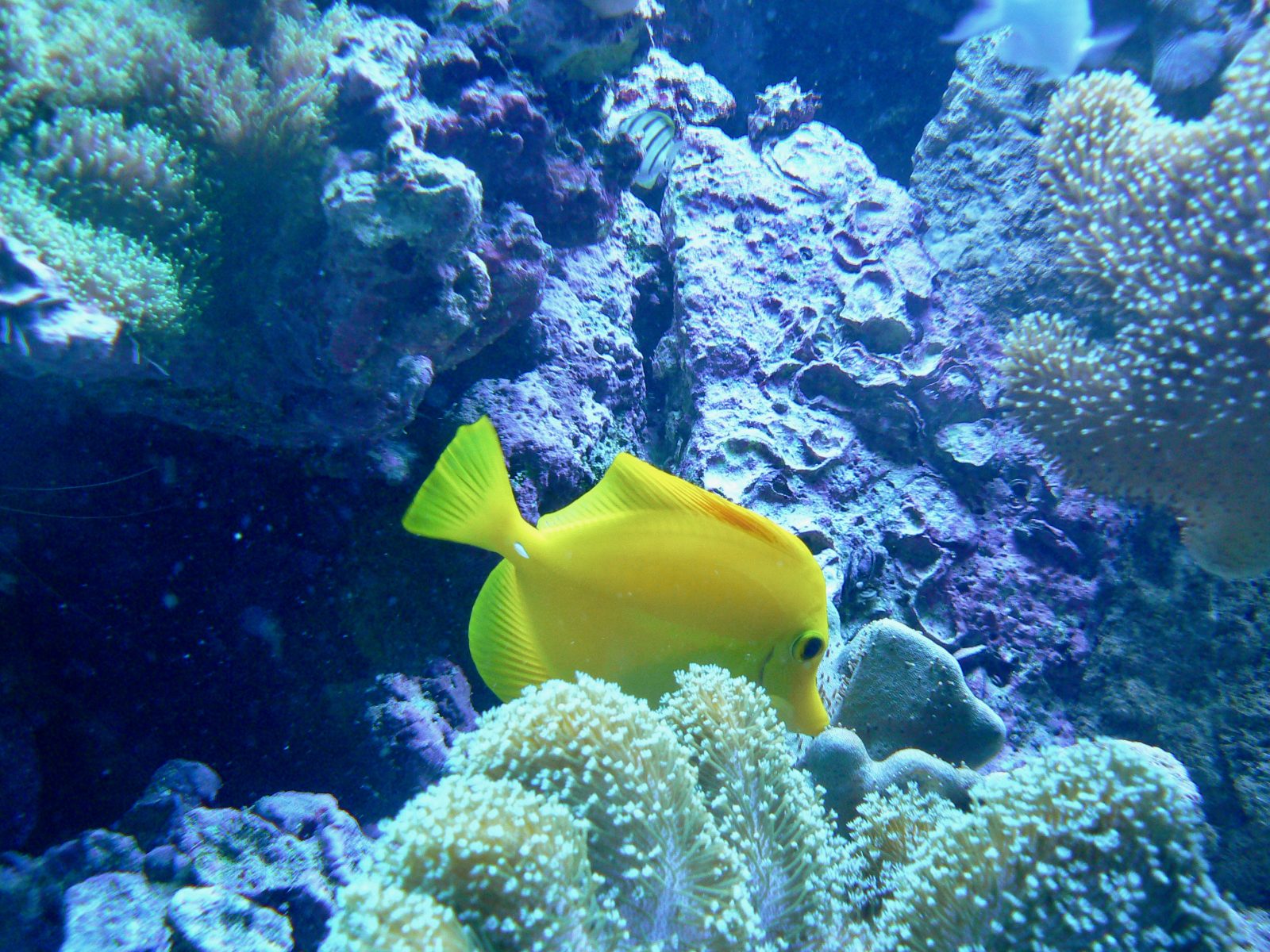
Located in the old Port Vell harbour, right next to the modern pier, L'Aquàrium de Barcelona is one of the largest and most important aquariums in the world devoted to the marine life of the Mediterranean. It holds as many as 35 huge tanks, home to more than 11,000 sea creatures representing 450 different species! It is the perfect attraction for escaping the heat or the rain, and it will delight children and adults alike.
The centrepiece is the giant Oceanarium — an enormous tank 36 metres across and 5 metres deep, holding a full 4 million litres of salt water!
An underwater walk without the effort
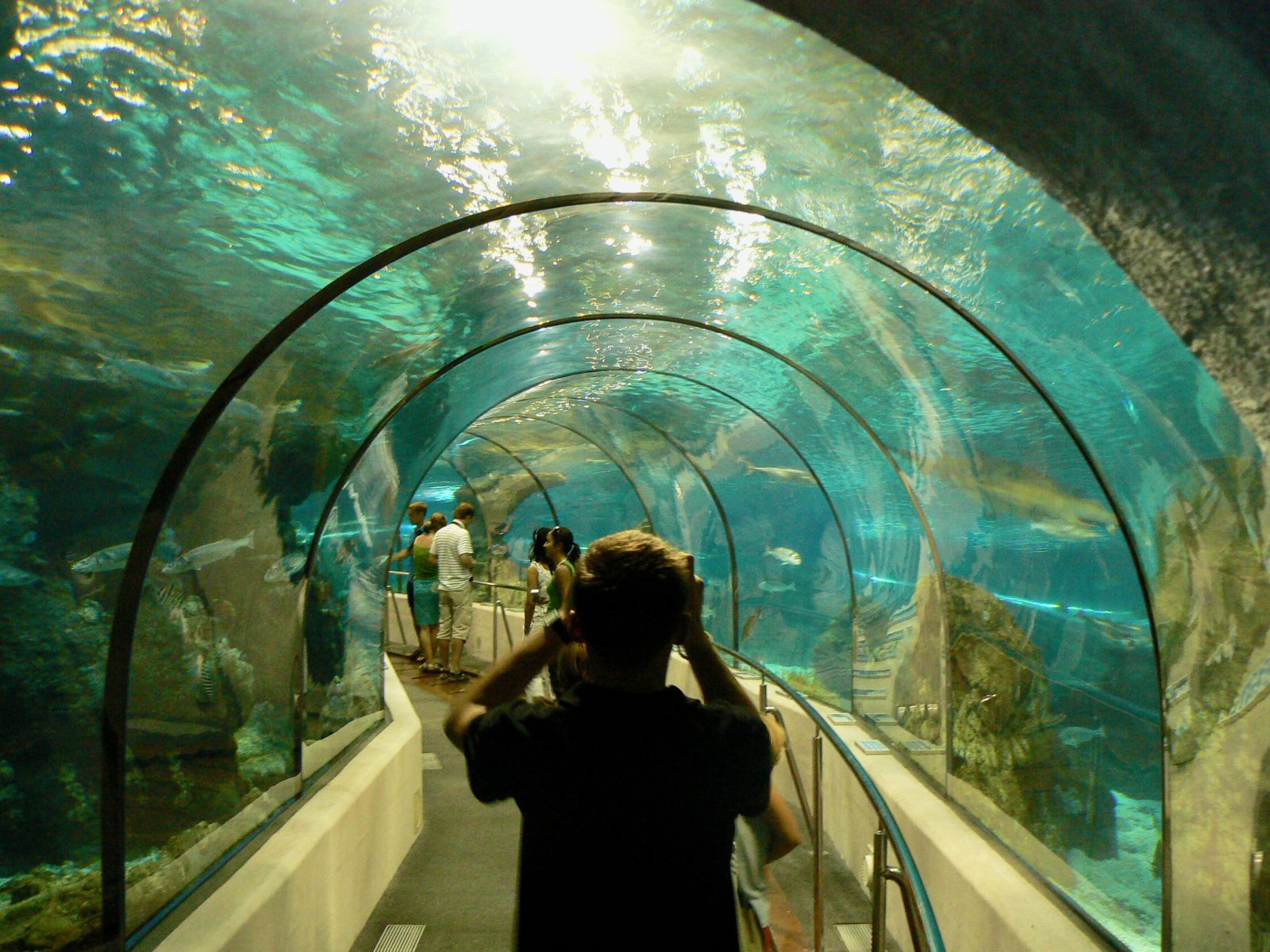
The biggest attraction in the whole complex is the 80-metre, completely transparent tunnel running straight through the middle of the great shark tank. Better still, there is a moving walkway installed inside it. You can simply step onto the belt and glide effortlessly along the bottom while enormous sharks, rays and sunfish drift majestically overhead.
A night in the monster's jaws (literally!)
The aquarium runs one of the most unusual attractions for children aged 8–12, called "Sleeping with Sharks". The youngest visitors can spend a whole night in sleeping bags laid out in the glass tunnel, falling asleep to the sight of predators circling above them.
Underwater tributes to Gaudí, and modern technology
The aquarium has been through a technological revolution. Right by the entrance is the largest interactive digital floor in Europe, along with a dedicated immersive room, "Journey to the Depths", where 360-degree screens simulate a descent to the bottom of the Mariana Trench. Architecture fans also get a superb installation, "Gaudí's Dragon Submerged" — LED-lit sculptures of the legendary dragon from Park Güell, sunk into an underwater world.
Extreme diving for the brave
If you have a diving licence and you are after real adrenaline, you can buy the option of diving with the sharks in the main tank. You go under either in a special cage or straight into open water, accompanied by qualified instructors.
Sharks are nothing like the one in *Jaws*
Many people expect blood-curdling scenes at feeding time. The truth is far calmer — divers hand the food straight into their mouths with special grabs, and the sharks (mainly sand tiger and dusky sharks) behave in an extremely phlegmatic, lazy way.
Tips
Getting there: The most convenient way is metro line L4 (Barceloneta station) or L3 (Drassanes station), then a walk across the charming wooden Rambla de Mar footbridge straight into the port.
Tickets: As with other attractions in Barcelona, buy tickets in advance online only. That way you will avoid the enormous queues at the box office in the sun.
Official booking: Direct tickets and current opening hours can be checked at tickets.aquariumbcn.com
Park Güell
Park Güell – Antoni Gaudí's Fairy-Tale Garden
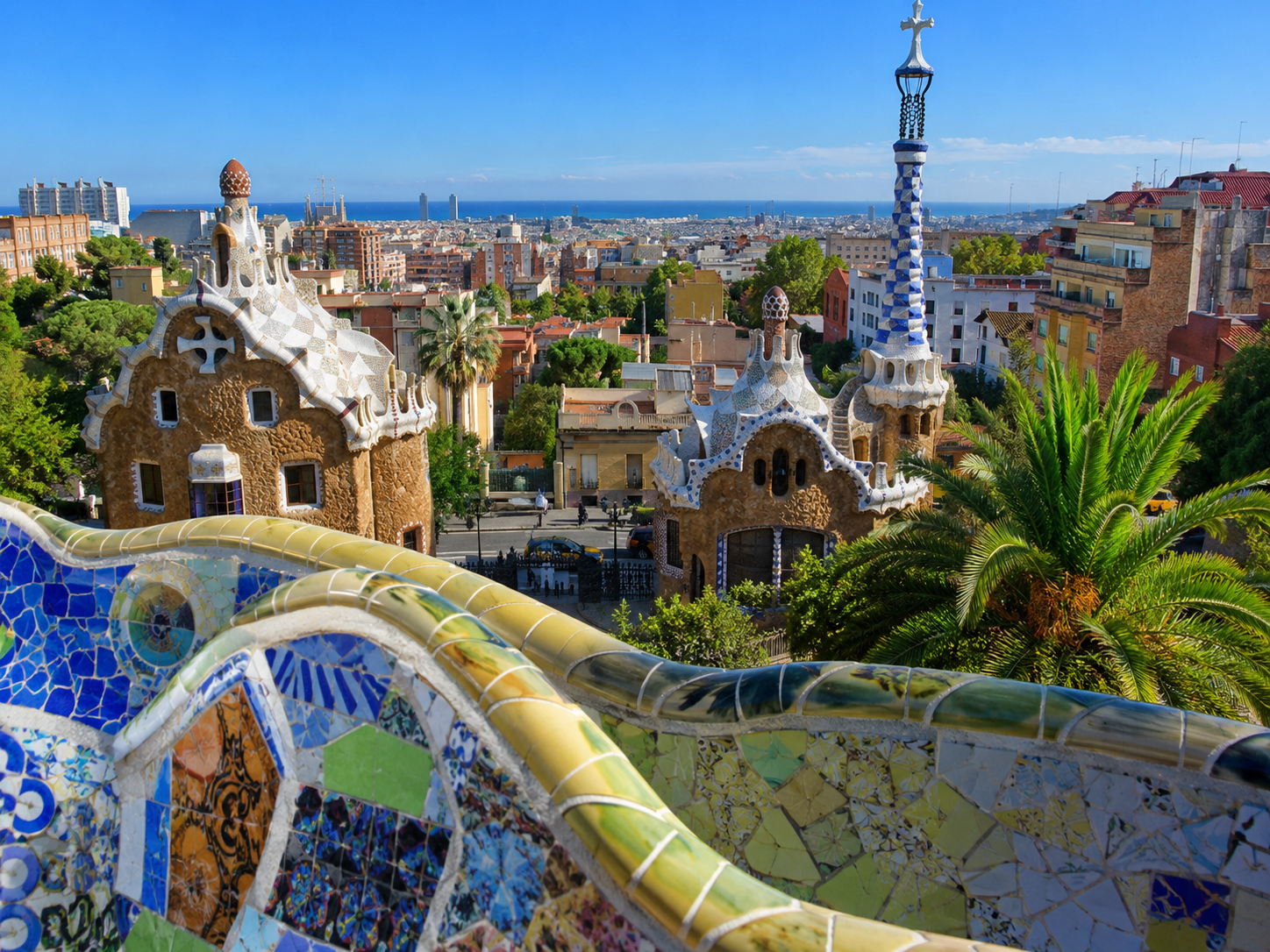
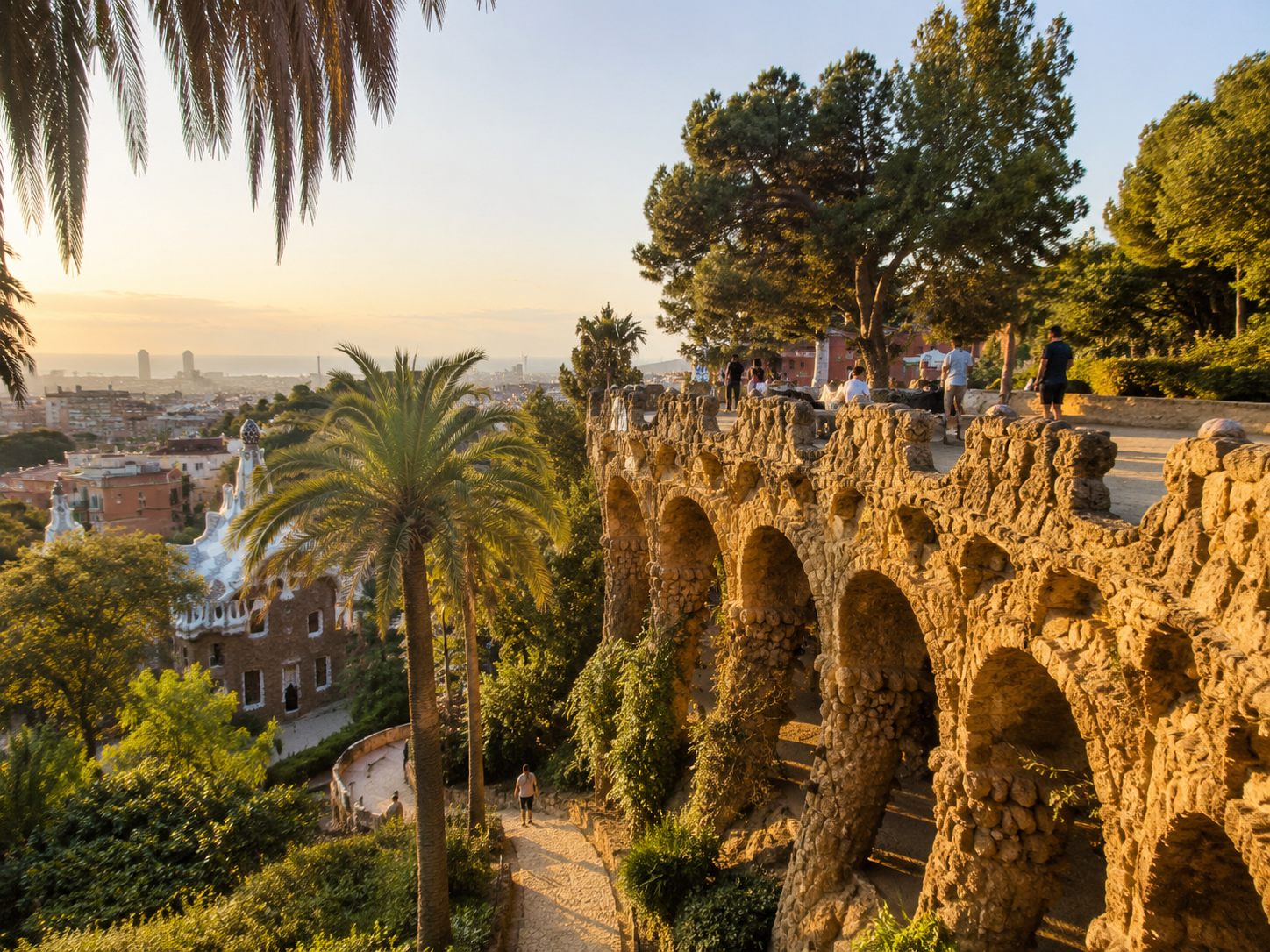
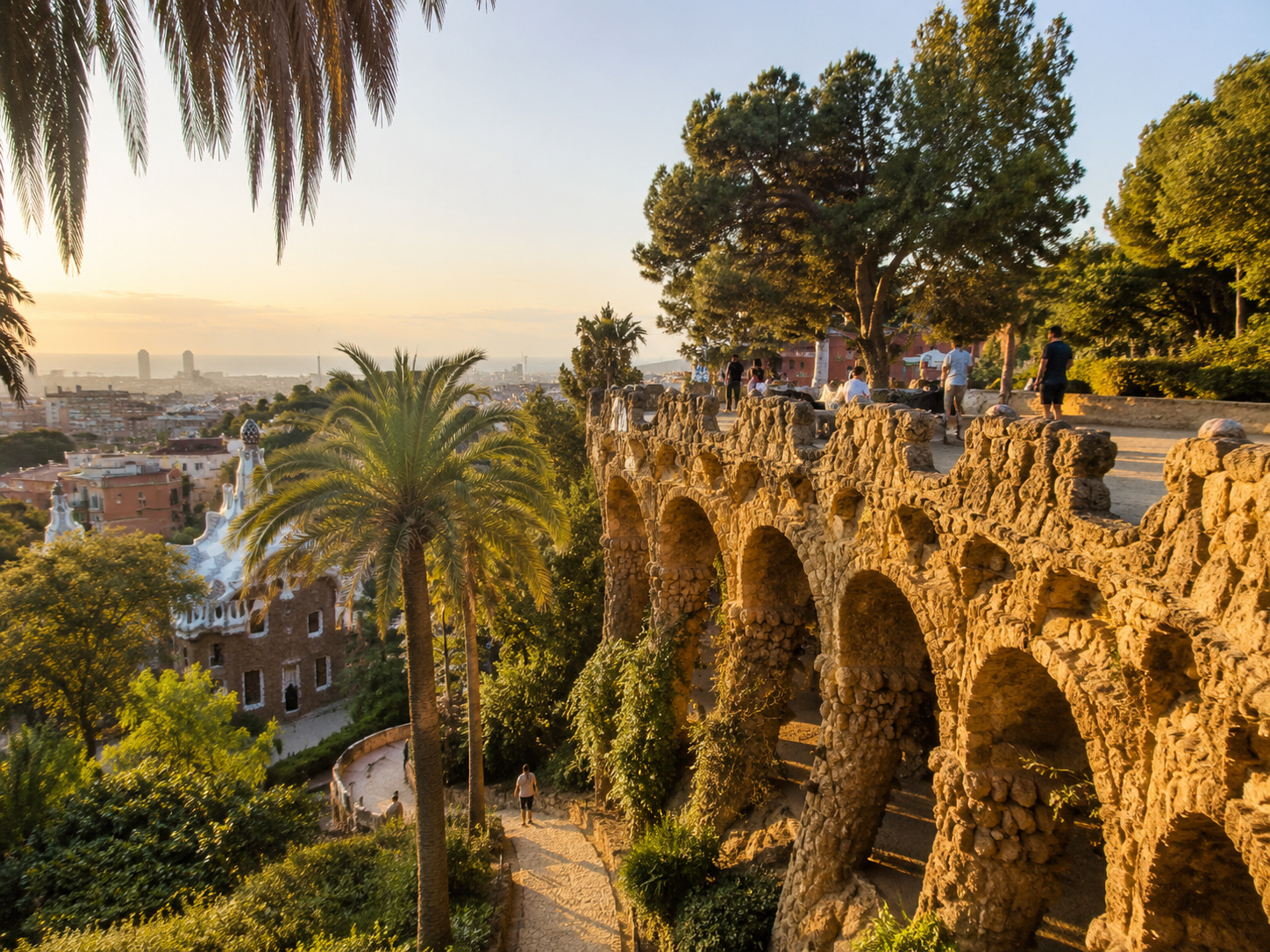
If you are looking for a place where architecture literally merges with nature, Park Güell is a must. This UNESCO World Heritage space is a true manifesto of Gaudí's genius. Instead of straight lines you will find structures resembling caves and tree trunks, and roofs shimmering with a thousand colours of broken ceramic.
A brilliant design that turned out to be... a total financial flop
Although millions of tourists queue up for the park today, it was originally meant to be a gated luxury housing estate for Barcelona's wealthy bourgeoisie. The visionary entrepreneur Eusebi Güell commissioned Gaudí to create a safe enclave far from the smog of the factories, modelled on English garden cities (hence the English spelling "Park" instead of the Catalan "Parc"). As many as 60 plots were planned for exclusive homes.
What went wrong? The project turned out to be a commercial failure. Its location on a steep hill was poorly connected to the city centre at the time, and the strict building rules Gaudí imposed put buyers off. Only two houses were ever built — Gaudí himself moved into one of them, for promotional purposes. In the end nobody bought the remaining plots, and years later Güell's heirs sold the land on to the city, which turned it into a public park.
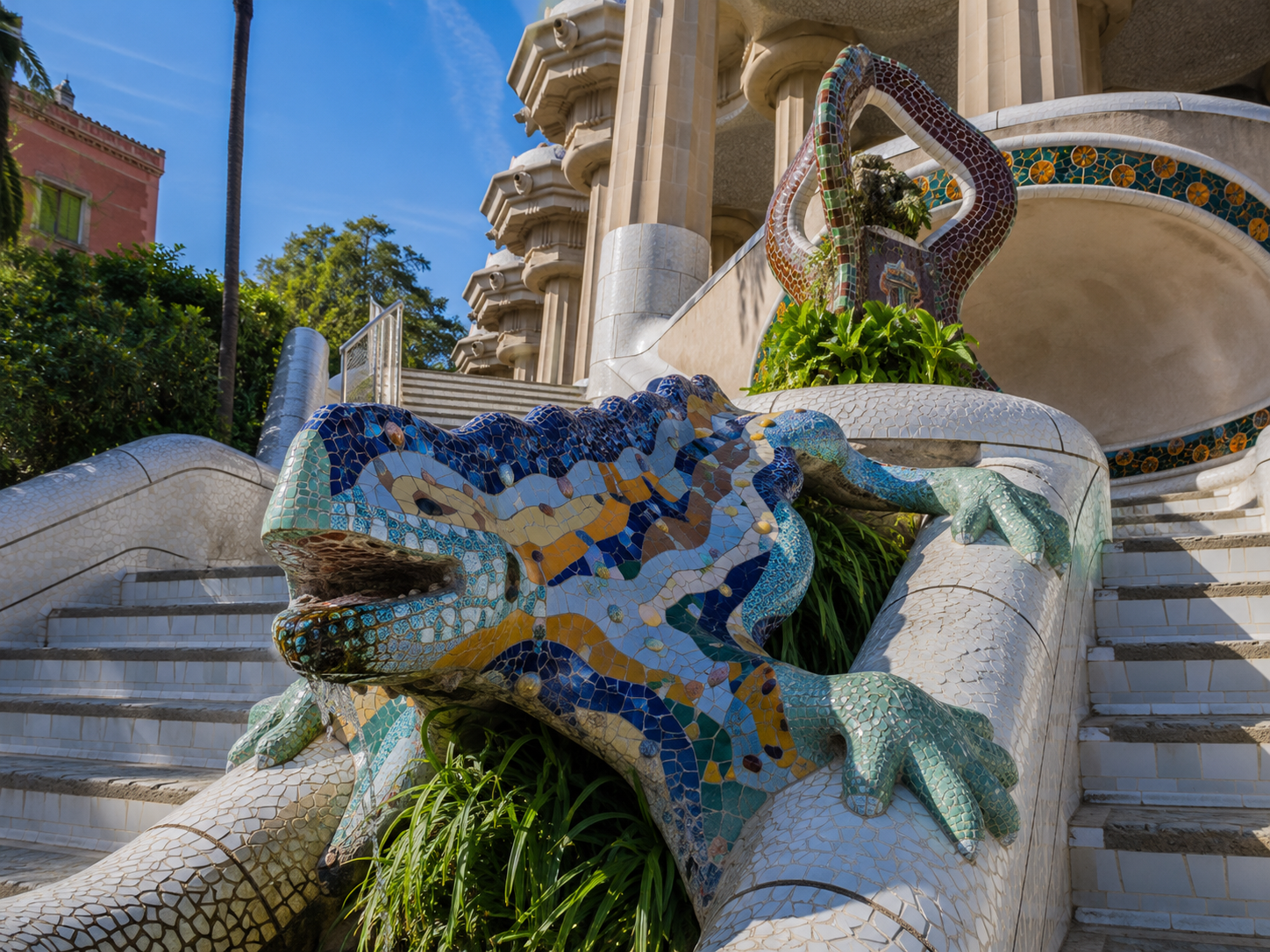
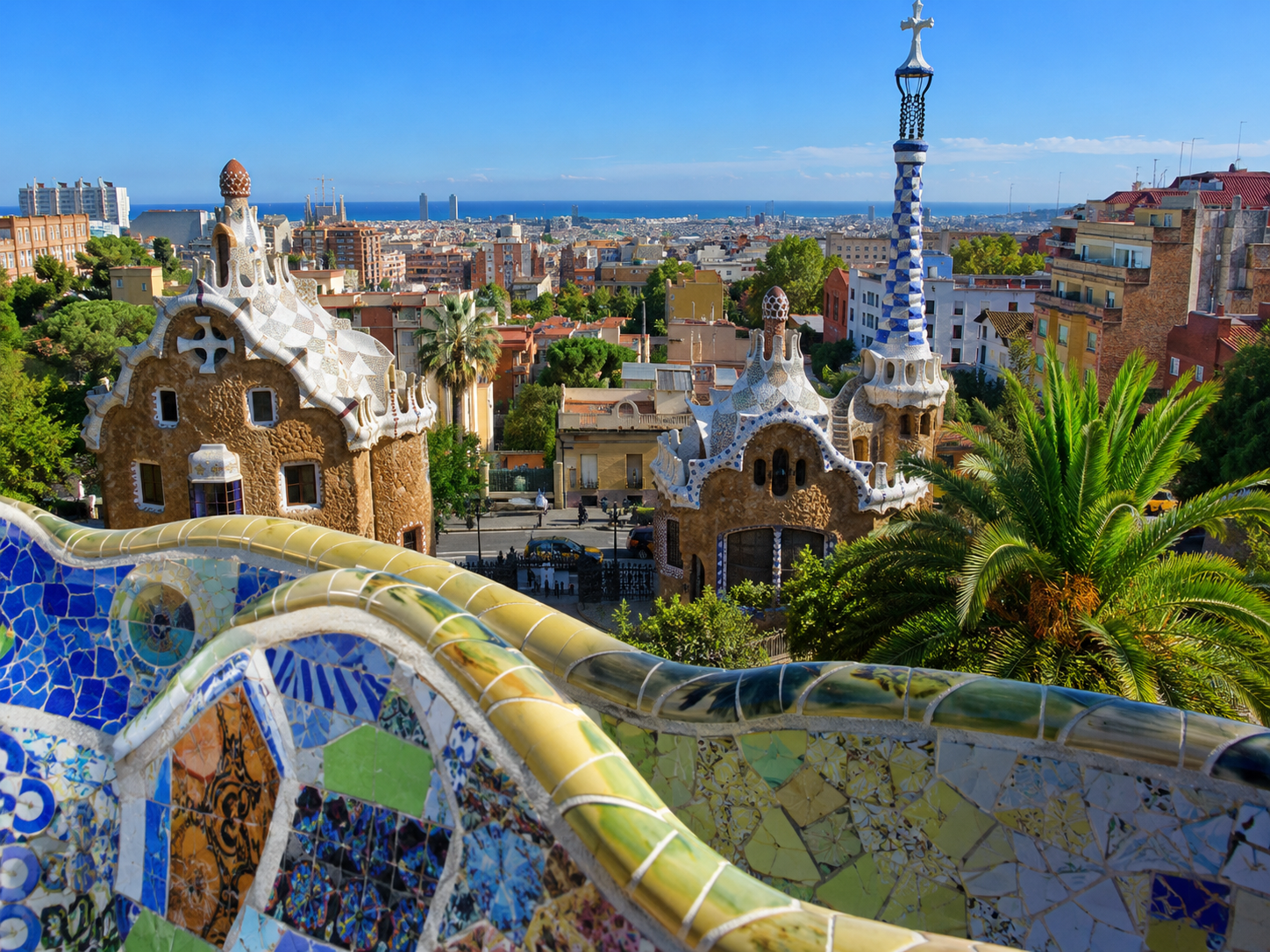
The longest bench in the world: a masterclass in ergonomics and... recycling
The centrepiece of the park is a vast viewing terrace ringed by a winding, undulating balustrade that doubles as the longest bench in the world. The whole thing is covered in colourful trencadís mosaic — a unique technique Gaudí created out of broken, waste pieces of ceramic tile collected from the factories nearby.
Gaudí was a fan of functionality. To design the perfect backrest for the bench, he had one of his workers sit down on a fresh layer of plaster. That gave him a perfect impression of the human spine — the bench is surprisingly comfortable! On top of that, the wavy shape creates small, half-enclosed nooks that encourage those sitting there to talk in private.
The Hall of a Hundred Columns (which has fewer)
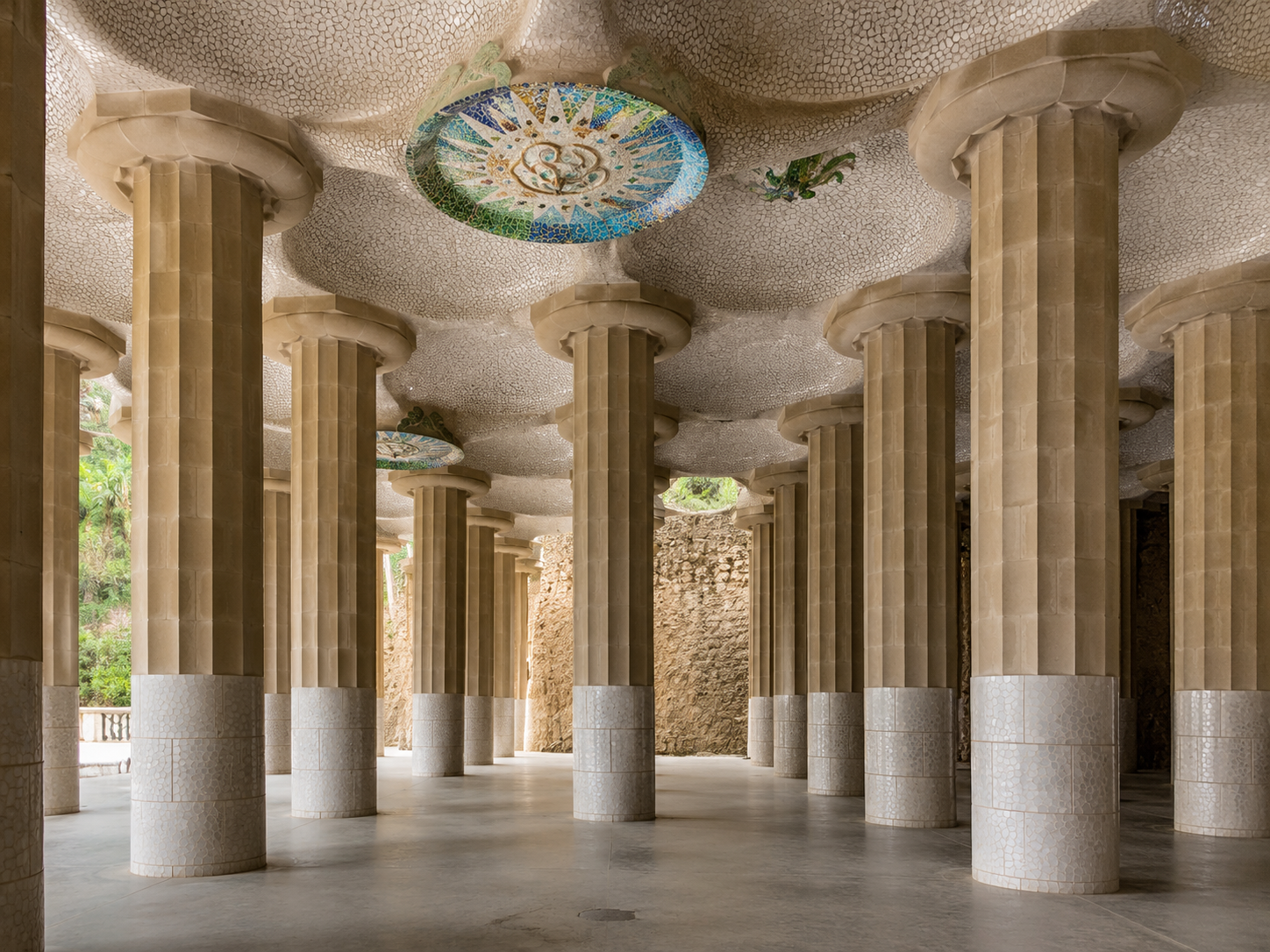
Just below the terrace lies a monumental space known as the Sala Hipòstila. It was originally to serve as a covered market for the residents of the estate. Although it is popularly called the Hall of a Hundred Columns, there are in fact exactly 86.
The structure conceals a brilliant piece of engineering: the columns are hollow. When rain falls on the great terrace above, sand and soil filter the water, which runs down channels inside the columns into an enormous underground cistern with a capacity of 1,200 cubic metres. The flowing water fed, among other things, the famous salamander fountain on the main staircase.
Tips
Two zones: The park is divided into a freely accessible, free-of-charge woodland zone and an enclosed, ticketed Monumental Zone containing all of Gaudí's works (including the bench and the famous salamander).
Tickets online only: For several years now the ticket offices on site have not been selling to tourists. An adult ticket currently costs €18 and admits you strictly at the time slot you have chosen (you get just 30 minutes' grace — after that the ticket is void!).
Official purchase: Beware of expensive middlemen — official tickets should be ordered directly from the official city site: parkguell-guide.com.